
Today, the Batman franchise is a box office machine. It feels almost inevitable that every time a new Batman movie hits theaters, it’ll rake in hundreds of millions — if not billions — worldwide. Since the early 1990s, audiences have seen multiple takes on the Caped Crusader, from Christopher Nolan’s gritty trilogy to modern interpretations like Robert Pattinson’s darker Gotham. Collectively, the movies have generated well over $5 billion globally.
But back in the late 1980s, things looked very different. Batman wasn’t considered a sure thing at all. In fact, for many moviegoers, the most recent memory of the character was the campy, tongue-in-cheek 1960s Adam West TV show — complete with colorful villains, exaggerated “POW!” and “BAM!” graphics, and a lighthearted tone that made the Dark Knight seem more like a Saturday morning cartoon hero than a serious figure.
When Warner Bros. decided to bring Batman to the big screen in 1989, there was no guarantee it would succeed. The studio made some unexpected choices: hiring Tim Burton, a quirky young director whose résumé included Pee-wee’s Big Adventure and Beetlejuice, and casting Michael Keaton, a comic actor best known for Mr. Mom, as the brooding Bruce Wayne. To say fans were skeptical is putting it mildly.
That’s where Jack Nicholson came in.
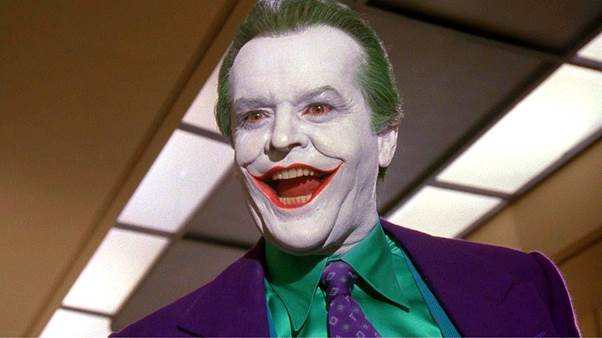
Jack Nicholson in the 1980s: Hollywood Royalty
By the time Warner Bros. approached Nicholson, he was more than just a movie star — he was Hollywood royalty. With two Academy Awards already under his belt (One Flew Over the Cuckoo’s Nest in 1975 and Terms of Endearment in 1983), Nicholson was both a critical darling and a box office draw. His name on a marquee guaranteed attention, and his career had been carefully built on daring choices and powerful performances.
Financially, Nicholson’s star power was reflected in his steadily rising salaries. In 1974, he took home $500,000 for Chinatown. By 1980, Stanley Kubrick’s The Shining earned him $1.25 million. And by the mid-1980s, he was commanding between $4 million and $5 million per role. Importantly, Nicholson had already shown a knack for creative contract negotiations.
A prime example came from One Flew Over the Cuckoo’s Nest. Instead of just accepting a flat salary, he structured a deal that gave him a $1 million base plus 15% of the film’s gross revenue. That gamble turned into a staggering $15 million payday by the late 1970s — which would equal around $60 million today. It proved Nicholson wasn’t just a brilliant actor; he was also a shrewd businessman who understood the value of owning a slice of the pie.
So when Warner Bros. came knocking with the role of the Joker, Nicholson wasn’t about to settle for an ordinary contract.
Negotiating the Joker Deal
Initially, the studio offered Nicholson a straightforward $10 million salary for playing Batman’s archenemy. For most actors, that would’ve been an easy yes. But Nicholson saw an opportunity for something far bigger.
Instead of taking the flat paycheck, he restructured the offer. He agreed to reduce his base salary to $6 million but demanded backend participation in the movie’s profits. That meant Nicholson would earn a percentage of the film’s box office take, no matter how high it went.
And here’s where things got really unusual: Nicholson also negotiated a cut of the merchandising revenue tied to the Joker character. In other words, every T-shirt, toy, lunchbox, or poster featuring his grinning villain put more money in his pocket.
At the time, this was almost unheard of. Superhero films weren’t proven moneymakers, and merchandise tied to them wasn’t guaranteed to fly off shelves. But Nicholson recognized the potential cultural explosion surrounding Batman. He knew Warner Bros. was desperate to land a megastar who could legitimize the film, and he used that leverage to secure terms no one else could.
This wasn’t just a contract — it was a groundbreaking business move. Nicholson was essentially betting on Batman becoming a cultural phenomenon before anyone else believed it would.
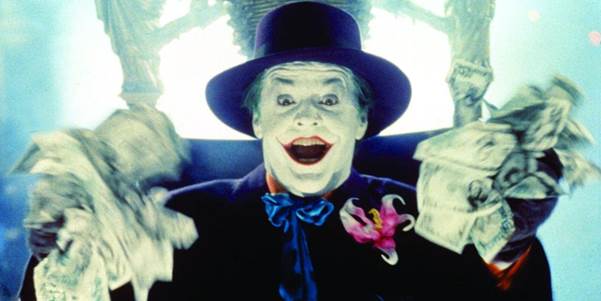
Batman 1989: A Cultural Earthquake
When Batman finally hit theaters in the summer of 1989, it wasn’t just another release — it was a full-blown pop culture event.
Tim Burton’s darker, gothic vision of Gotham City shocked critics who had expected something closer to the Adam West camp. Michael Keaton silenced doubters with a surprisingly intense portrayal of Bruce Wayne. And then there was Nicholson’s Joker — chaotic, menacing, flamboyant, and unforgettable. His performance didn’t just steal the movie; it redefined what a comic book villain could be on screen.
The film became a box office juggernaut, earning $411 million worldwide — a colossal figure for the era. But the real gold mine was the merchandising boom. Suddenly, Joker action figures, Halloween costumes, T-shirts, posters, and trading cards were everywhere. Kids begged their parents for Joker gear, and collectors snatched up memorabilia.
For Warner Bros., the success proved that superhero films could be billion-dollar enterprises. For Nicholson, it meant his contract was paying off beyond imagination.
The Payday That Shocked Hollywood
Thanks to his backend deal and merchandising cut, Nicholson’s take from Batman skyrocketed. Within just a few years, he had earned more than $40 million from the project. By the mid-1990s, estimates put his total payday at $60 million — which equals roughly $130 million in today’s dollars.
That single contract instantly became one of the most profitable acting deals in movie history. No actor before him had made that much money from one film. Hollywood insiders couldn’t stop talking about it. Studios grumbled about having given away so much, while actors studied Nicholson’s blueprint closely.
Setting a New Benchmark
Nicholson’s Joker deal didn’t just make him rich; it changed Hollywood’s entire approach to contracts. Suddenly, top actors realized they could negotiate for more than just a paycheck — they could demand ownership stakes in the success of the movies they starred in.
In the years that followed, stars like Tom Hanks, Tom Cruise, and Jim Carrey all adopted similar strategies. Cruise, in particular, became famous for backend deals, earning enormous sums from the Mission: Impossible franchise. Decades later, Robert Downey Jr. would use the same model with Marvel, reportedly making more than $75 million from Avengers: Endgame alone.
The template had been set by Nicholson. His Joker deal became the gold standard for how Hollywood’s elite could leverage their star power into long-term fortunes.
Who Surpassed Nicholson’s Deal?
For years, Nicholson’s Batman contract was unmatched. But eventually, a few stars managed to top it:
- Bruce Willis – The Sixth Sense (1999): Willis negotiated a $14 million base salary plus 17.5% of the film’s profits and ancillary revenue. The thriller went on to earn $670 million globally, giving Willis a final payday of about $114 million — roughly $194 million in today’s money.
- Arnold Schwarzenegger – Terminator 3: Rise of the Machines (2003): Schwarzenegger’s deal included a $29.25 million base, private jet perks, daily overage fees, and 20% of gross revenues. The total? Around $110 million, or $180 million adjusted for inflation.
Even though these actors ultimately scored larger windfalls, Nicholson’s contract remains the most famous deal in Hollywood history — not because it was the biggest, but because it was the first to completely reshape the industry.
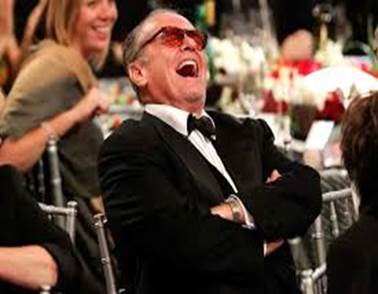
Why Nicholson’s Deal Still Matters
Looking back, Nicholson’s 1989 Joker payday was about more than money. It symbolized a shift in Hollywood’s balance of power. For decades, studios had controlled the profits while actors took home flat salaries. Nicholson proved that A-list stars could demand a genuine share of the success they helped create.
It also highlighted the growing importance of merchandising and brand spin-offs in blockbuster filmmaking. Nicholson didn’t just act in Batman; he tied his financial future to every Joker doll, lunchbox, and T-shirt sold. Today, this kind of thinking is standard in the industry, but in 1989, it was revolutionary.
Most importantly, Nicholson’s deal helped legitimize comic book adaptations at a time when few people believed in them. Without Batman’s success — and without Nicholson’s scene-stealing performance — the superhero movie boom we live in today might never have happened.
Jack Nicholson’s Joker was unforgettable. He laughed, he terrified, and he dominated every scene he was in. But behind the performance was a contract that changed Hollywood forever. By betting on Batman before it was cool, Nicholson walked away with one of the most legendary paydays in movie history and set a new standard for how stars negotiate their worth.
Even though bigger contracts have since been signed, Nicholson’s Joker deal remains the one everyone talks about — the moment Hollywood learned that the clown prince of crime could also be the king of contracts.