

Few figures in the world of football have achieved the legendary status that Sir Alex Ferguson enjoys. To millions around the globe, he is more than just a football manager — he is a symbol of discipline, longevity, and relentless pursuit of excellence. His life’s journey, from the shipyards of Glasgow to the glittering heights of Old Trafford, reflects not only an extraordinary career but also a philosophy that transcends sport itself.
As of 2025, Sir Alex Ferguson’s net worth is estimated at $75 million, a testament to decades of success, wise investments, and an enduring influence in the footballing and business worlds. Yet his wealth, impressive as it may be, tells only part of his story. Ferguson’s real fortune lies in his legacy — a life defined by leadership, loyalty, and a mindset that turned ambition into history.
Early Life: Humble Beginnings in Govan
Alexander Chapman Ferguson was born on December 31, 1941, in Govan, a working-class district of Glasgow, Scotland. His father, Alexander Beaton Ferguson, was a shipyard worker, and his mother, Elizabeth, managed the household.
Growing up in post-war Scotland, young Alex was shaped by a community of hard-working men and women who valued discipline, resilience, and loyalty. Football wasn’t just a game — it was a way out, a chance to dream beyond the shipyards.
Ferguson’s love affair with the sport began on the streets of Govan, where he would spend hours kicking a ball with local kids. He joined local youth clubs and displayed early signs of leadership and intelligence on the field. Though he wasn’t destined to be one of the great players, he was always known for his sharp football brain — and his fiery personality.
Playing Career: The Foundation of a Manager
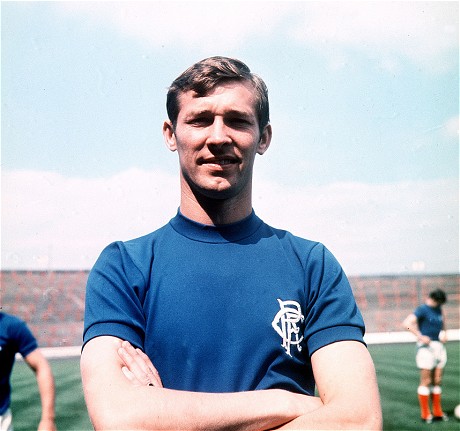
Before becoming a managerial icon, Ferguson was a professional player. He began his career at Queen’s Park FC in 1957, making his debut at just 16. Despite scoring goals regularly, he was never a guaranteed starter — a frustration that would later fuel his empathy for young players seeking opportunities.
He later played for St. Johnstone, Dunfermline Athletic, and Rangers, among others. At Dunfermline, he truly shined, finishing as the top scorer in the Scottish league in 1965–66. However, his stint with Rangers ended abruptly and painfully due to internal conflicts, leaving him with deep emotional scars — but also teaching him resilience and the value of authority.
By the time he retired as a player in 1974, Ferguson was ready to take what he had learned — both good and bad — and channel it into management.
The Birth of a Manager: East Stirlingshire and St. Mirren
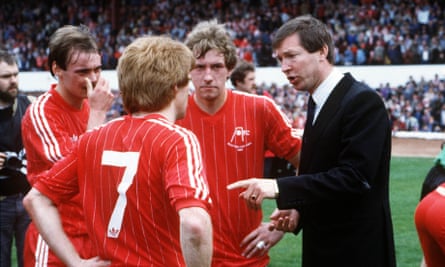
Ferguson’s managerial career began at East Stirlingshire in 1974. Even at 32, he displayed the intensity that would later define him. He was demanding, focused, and fearless in enforcing discipline. Players recalled his early team talks as fiery and detailed, his standards already sky-high.
Within months, he was hired by St. Mirren, a struggling second-division club. Under Ferguson’s guidance, the team transformed. He reshaped training routines, emphasized fitness, and instilled belief in his players. Within a few years, St. Mirren earned promotion to the top tier of Scottish football.
It was his first major achievement as a manager — though his time there ended controversially after a dispute with the club’s board. Still, it set the tone for the rest of his career: Ferguson was never afraid to fight for his principles.
Aberdeen: The Miracle Worker
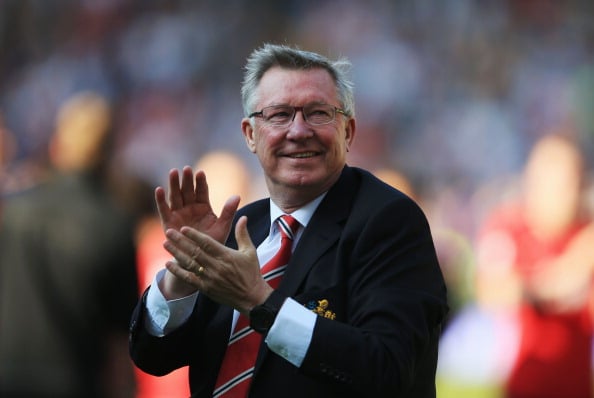
In 1978, Ferguson took over Aberdeen FC, a club perpetually overshadowed by Scottish giants Celtic and Rangers. What followed was nothing short of a footballing miracle.
Ferguson revolutionized Aberdeen, building a team from local talent and instilling a work ethic that rivaled any in Europe. He rejected the inferiority complex Scottish teams often carried against the Glasgow giants, demanding his players believe they could beat anyone — and they did.
Under his leadership, Aberdeen broke the Old Firm’s dominance, winning three Scottish league titles, four Scottish Cups, and the European Cup Winners’ Cup in 1983 — defeating Real Madrid in the final. That victory marked Ferguson’s arrival on the global stage.
He had proven that greatness wasn’t confined to resources or reputation — it came from leadership, belief, and unity.
Manchester United: The Empire Builder
In November 1986, Manchester United took a gamble. The club, once dominant under Sir Matt Busby, had fallen into mediocrity. Ferguson was brought in to rebuild — but few could have predicted what was to come.
The early years were tough. Ferguson faced criticism, fan frustration, and calls for his dismissal. But behind the scenes, he was laying the foundation of an empire. He overhauled United’s youth system, restructured training, and instilled discipline across all levels of the club.
His mantra was simple: “Work hard, stay humble, and play for the badge.”
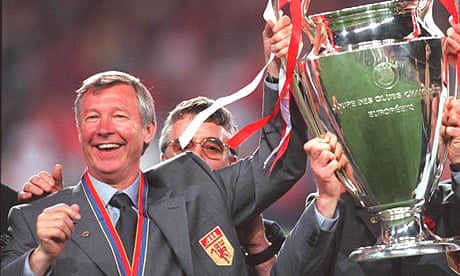
The turning point came in 1990 when United won the FA Cup. That victory sparked a golden era. Over the next two decades, Ferguson led Manchester United to unprecedented heights:
- 13 Premier League titles
- 5 FA Cups
- 2 UEFA Champions League titles
- 4 League Cups
- 2 Club World Cups
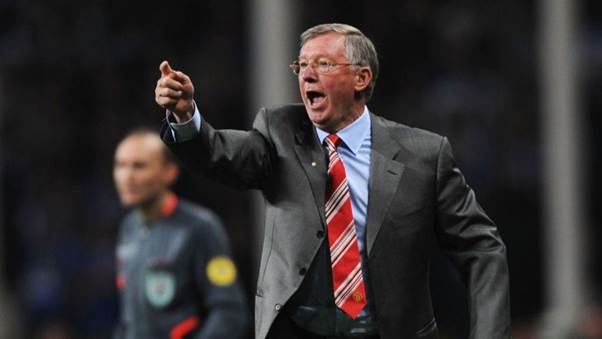
His success wasn’t just measured in trophies — it was in the culture he built. Ferguson transformed United into a global brand, revolutionizing player management and the club’s commercial power. Under his leadership, the team became synonymous with resilience, attacking flair, and a never-say-die attitude.
Wealth Through Football: Salaries, Contracts, and Success
By the early 2000s, Ferguson wasn’t just the most successful manager in football — he was one of the wealthiest.
At the peak of his career at Manchester United, he reportedly earned £7 million per year in salary and bonuses. His endorsement deals, speaking engagements, and autobiography sales added millions more to his income.
He was also wise with his money. Unlike many in football, Ferguson prioritized financial stability over extravagance. He invested heavily in property, particularly in Cheshire and Glasgow, and later became involved in various business ventures, including horse racing syndicates.
His estimated net worth of $75 million reflects both his longevity and his prudence. While football gave him fame, his disciplined approach to money ensured long-term wealth.
The Ferguson Philosophy: Leadership, Discipline, and Human Psychology
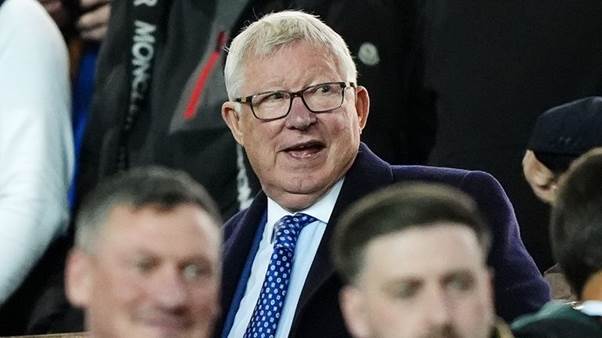
Behind his financial success and trophy cabinet lies Ferguson’s true genius — his leadership.
He managed not just players, but personalities. From Eric Cantona’s brilliance to Cristiano Ronaldo’s ambition, from David Beckham’s stardom to Roy Keane’s ferocity — Ferguson’s ability to manage egos and maintain authority was unmatched.
He believed in tough love, demanding discipline and respect while also protecting his players from external pressures. His famous “hairdryer treatment” — a verbal lashing at close range — became legendary. But those who played under him often said that behind the stern exterior was a man who cared deeply about his players’ lives and well-being.
His leadership principles later became the subject of Harvard Business School case studies. Students analyzed how Ferguson built long-term success through adaptability, emotional intelligence, and strategic thinking — lessons that apply far beyond football.
Life After Retirement: The Man Behind the Legend
Sir Alex Ferguson retired in 2013, after leading Manchester United to yet another Premier League title. His farewell was emotional — a standing ovation from the Old Trafford crowd, tears in his eyes, and a final message to the fans:
“Your job now is to stand by our new manager. That’s the most important thing.”
Even in retirement, Ferguson remained an integral part of Manchester United. He served as a club ambassador and director, mentoring coaches and influencing the club’s strategic direction.
His post-retirement life has been marked by new passions: writing, speaking, philanthropy, and family. His memoir, My Autobiography, became a bestseller, earning millions in sales and translations worldwide.
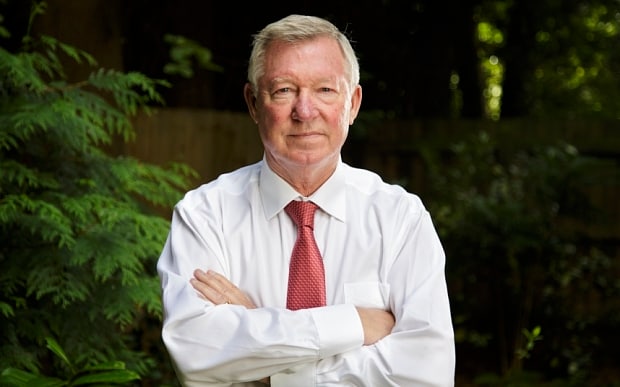
However, his life took a terrifying turn in 2018, when he suffered a brain hemorrhage. The football world united in concern, and after emergency surgery, Ferguson made a remarkable recovery. The experience only deepened his appreciation for life and the people around him.
In his words:
“I realized that no amount of trophies, no amount of success means anything without health and family.”
Investments and Philanthropy
Beyond football, Ferguson has proven himself a savvy investor and generous philanthropist.
He has invested in real estate, stock portfolios, and publishing ventures. His association with horse racing, alongside other businessmen, also yielded profits — though he often described it as “a passion, not a paycheck.”
On the philanthropic side, Ferguson has donated millions to causes close to his heart. He helped fund the Sir Alex Ferguson Centre for Stroke Research in Salford and contributed to youth sports initiatives across Scotland and England. His charitable giving reflects his belief in giving back to the communities that shaped him.
Lifestyle: A Balance of Modesty and Comfort
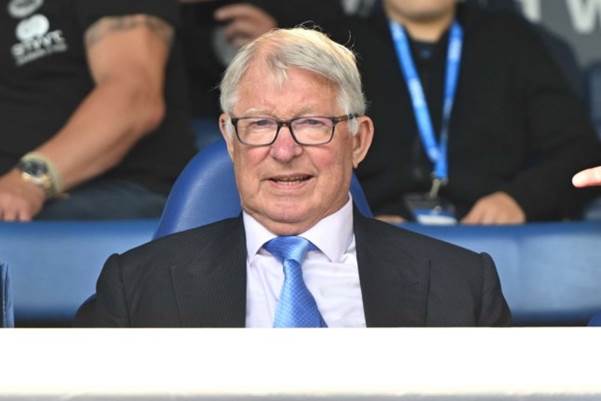
Despite his immense wealth, Ferguson has always lived relatively modestly. He resides in Cheshire, not far from Manchester, in a comfortable yet understated home. His luxury comes not from extravagance but from peace — family dinners, horse racing, and the occasional glass of red wine with close friends.
He drives high-end but practical cars, enjoys literature, and still follows football passionately. But what stands out most is his humility. He has often said:
“Money is not success. Legacy is.”
That attitude has defined his approach to life — grounded, focused, and grateful.
Legacy: More Than Just Trophies
Sir Alex Ferguson’s influence extends far beyond football. His leadership principles have inspired CEOs, military leaders, and politicians. His story is taught in business schools and leadership courses around the world as an example of consistency, adaptability, and human management.
Under his stewardship, Manchester United became not only a football club but a global brand valued at billions. His philosophy of long-term vision, youth development, and emotional intelligence set a blueprint for success that managers across sports still emulate.
When Ferguson stepped down, it marked the end of an era — not just for Manchester United but for football itself. Yet his presence remains. The training ground bears his name; his shadow still looms large in the club’s DNA.
To this day, he remains one of the most respected voices in world football, occasionally sharing insights in documentaries, interviews, and conferences.
At 83, Sir Alex Ferguson’s life stands as a testament to the power of vision, discipline, and self-belief. His estimated net worth of $75 million is impressive, but it’s the intangible wealth — the respect, influence, and legacy — that defines him.
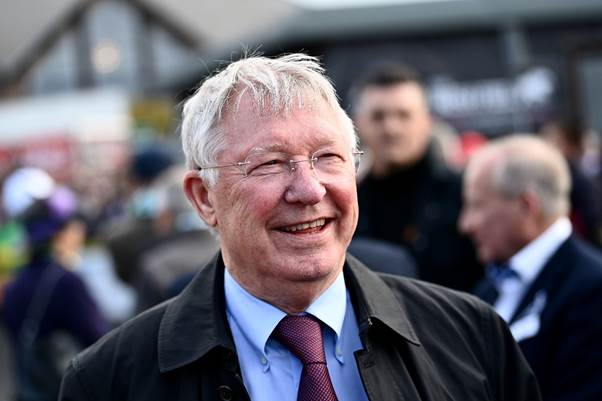
From Govan’s shipyards to Europe’s grandest stadiums, Ferguson’s story embodies a timeless truth: success isn’t about where you start, but how far you’re willing to go with resilience and purpose.
He remains, even in retirement, a symbol of leadership at its finest — proof that greatness comes not from comfort, but from conviction.
In the end, Sir Alex Ferguson’s real fortune is not measured in millions, but in moments — the nights of glory, the players he shaped, and the millions of fans who still chant his name.
And for that, his legacy, like his wealth, will endure for generations to come.