
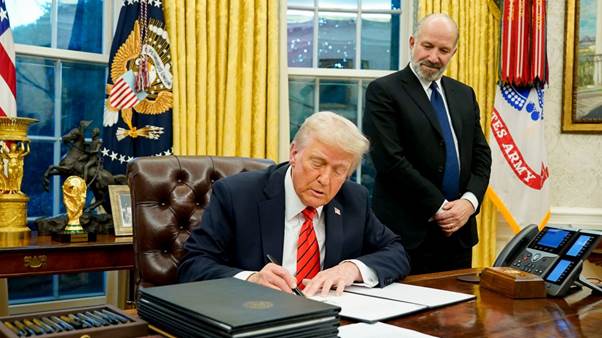
When former President Donald Trump stood before reporters in early October 2025 and declared that medium- and heavy-duty trucks imported into the United States will face a 25 percent tariff starting November 1, it sent an immediate jolt through the auto industry and global trade networks. On the surface, the message sounded simple — protect American jobs, strengthen domestic manufacturing, and rebalance trade. But beneath that headline lies a much larger and more complicated story.
This new tariff touches almost every part of the logistics chain — from the plants that build the trucks to the small business owners who drive them, and even the everyday consumer who relies on those trucks to move goods across the country.
A Push to “Bring It Home”
Trump framed the policy as part of a larger effort to “bring back what belongs to America.” The idea is to encourage companies to assemble more vehicles inside U.S. borders rather than importing fully built trucks from countries like Mexico, Canada, Japan, and Germany.
The heavy-duty truck industry is often seen as a backbone of American commerce. These are the vehicles that haul groceries to supermarkets, deliver building materials to job sites, and keep manufacturing plants supplied. Supporters of the tariff argue that such an essential sector shouldn’t depend heavily on foreign production, especially at a time when global supply chains remain fragile.
They also point out that domestic truck makers such as Freightliner, Peterbilt, and Kenworth could gain breathing room to expand and reinvest. More orders placed locally could mean more jobs in assembly plants and in U.S. parts manufacturing — a message that resonates strongly in industrial states like Ohio, Michigan, and Texas.
A Sudden Move with Far-Reaching Ripples
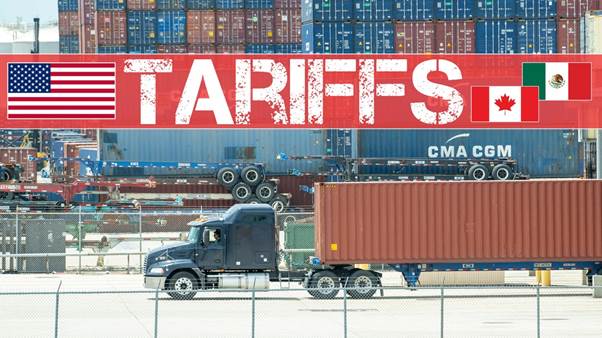
But while the political appeal is easy to grasp, the economic consequences are far less predictable. The tariff applies to medium- and heavy-duty trucks — the workhorses of logistics. Most companies that operate large fleets replace a portion of their vehicles each year. Those purchases are planned months in advance. Introducing a steep 25% tariff with only a few weeks’ notice means many companies will be caught mid-cycle, facing higher prices they didn’t budget for.
Importers will almost certainly try to rush shipments before the November 1 deadline, hoping to get trucks into the country before the tariff takes effect. Ports and customs facilities could see a short-term surge in arrivals as companies scramble to avoid paying millions in new duties. After that, sales may slow sharply while everyone recalculates their costs.
Who Gains and Who Struggles
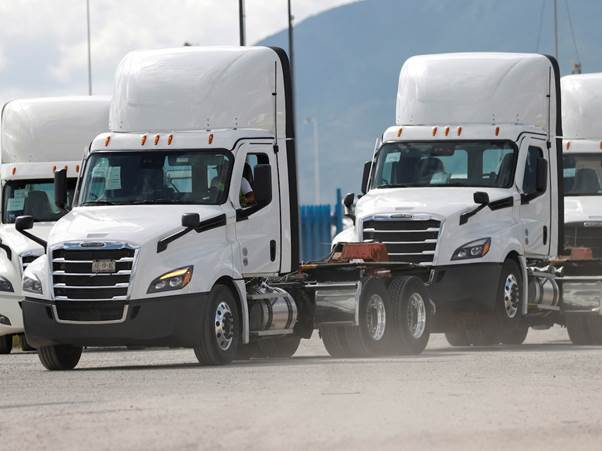
Domestic manufacturers will likely welcome the move. If imported trucks suddenly become 25% more expensive, U.S.-built vehicles will look more attractive. Companies like PACCAR (the parent of Peterbilt and Kenworth) could see an uptick in orders. The same goes for Freightliner, Mack, and Volvo Trucks North America — all of which operate major U.S. facilities.
However, fleet operators and independent truckers may feel the pain first. These are the people who buy or lease trucks directly, often on tight profit margins. For them, a price jump of tens of thousands of dollars per vehicle can make the difference between growth and survival.
Small trucking companies — those with just a few rigs on the road — already face steep financing costs, insurance premiums, and maintenance bills. If new trucks suddenly cost more, many may hold on to older equipment longer, potentially slowing the industry’s shift toward more fuel-efficient and environmentally friendly fleets.
The Mexico Question
One of the most complicated aspects of this tariff involves Mexico, which has become a major hub for truck assembly. For decades, U.S. automakers have built parts in the United States, shipped them to Mexico for final assembly, and then brought the finished trucks back across the border. This production pattern exists under the rules of the USMCA (the trade agreement that replaced NAFTA), which allows tariff-free movement of goods if a sufficient percentage of their components are sourced from North America.
The new 25% tariff could strain that delicate balance. Mexico’s government has already signaled frustration, pointing out that many of its exported trucks already contain a high percentage of U.S.-made components. By taxing those imports, critics argue, Washington is effectively penalizing its own supply chain — the very network that makes North American manufacturing competitive.
If Mexico or other partners decide to respond with tariffs of their own, the situation could escalate into another mini trade war, with both sides losing in the long run.
Trucking and the Broader Economy
Trucks are the invisible thread that ties the U.S. economy together. Roughly 70% of all goods in the country travel by truck at some point. Every increase in transportation cost eventually shows up elsewhere — in the price of groceries, construction materials, fuel, and retail products.
A 25% tariff might sound like a policy aimed at foreign companies, but its ripple effects will land close to home. A logistics company replacing 100 trucks could see millions added to its costs. To stay profitable, it might raise freight rates, which retailers would then pass along to consumers.
Some analysts believe the policy could contribute to modest inflationary pressure, particularly in sectors tied to road transport. That doesn’t mean an immediate spike in consumer prices, but rather a slow, steady upward pull — the kind that households notice only after several months.
Industry Reactions: Between Relief and Alarm
Reactions across the trucking and auto sectors have been mixed. Labor unions have generally welcomed the decision, arguing that any step to boost domestic production is a win for American workers. “We’ve been asking for this kind of action for years,” one union leader said in a recent interview. “If we build trucks here, we keep our jobs here.”
On the other hand, industry trade groups warn that tariffs could backfire. They argue that rather than bringing jobs back, the sudden shock might scare away investment, as global manufacturers become wary of unpredictable trade policies. Many multinational companies plan their production strategies years ahead — and uncertainty makes long-term commitments risky.
Possible Workarounds and Adjustments
Businesses rarely sit still when the rules change. Some companies are already exploring creative solutions.
- Local assembly expansions: Foreign manufacturers could speed up investments in U.S. factories to sidestep the tariff altogether.
- Component reclassification: Some importers might ship trucks in partially assembled form, finishing them in the United States to qualify for a lower duty.
- Supply chain reshuffling: Expect a renewed emphasis on U.S.-made engines, transmissions, and axles as companies aim to raise domestic content and claim exemptions under trade agreements.
Each of these responses takes time and money, but the industry has proven remarkably adaptable in the past.
The Politics of Tariffs
Beyond economics, this move is also politically charged. Tariffs resonate with voters who feel that free trade has hollowed out American manufacturing. Announcing a strong stance on imported trucks plays well in industrial states — and in campaign seasons, the optics can be as powerful as the policy itself.
Still, trade experts caution that tariffs rarely deliver quick results. They can encourage domestic investment, but they also raise prices and risk retaliation from trading partners. In some cases, they even lead to higher costs for the very industries they aim to protect.
What Comes Next
In the coming months, the true effects of the 25% tariff will start to reveal themselves. Large fleets may accelerate domestic purchases. Importers will adjust sourcing. And policymakers will face pressure to clarify which vehicles and parts fall under the new rule.
One thing is certain: this isn’t just about trucks. It’s a test of how far the United States is willing to go to rebuild its industrial strength — and how much economic turbulence it’s willing to accept in pursuit of that goal.
The roads ahead will still be full of Peterbilts and Freightliners, but what happens under their hoods — and where those parts come from — may soon look very different.