
For months, controversial influencer and former kickboxing champion Andrew Tate flaunted his wealth online, posting photos and videos of himself behind the wheels of supercars, private jets, and yachts. His lavish lifestyle became central to his persona: a man who preached financial freedom, masculinity, and power. Yet in early 2023, much of that carefully cultivated image collided with reality when Romanian authorities seized millions of dollars worth of his assets.
On January 18, 2023, Romania’s Asset Recovery and Management Agency (ANABI) announced that they had confiscated nearly $4 million worth of property linked to Tate and his brother, Tristan. Among the items seized: a fleet of luxury cars that had been paraded across social media, along with high-end watches and bundles of international currency.
This event not only shook Tate’s followers but also reignited debates about wealth flaunting, online influence, and the consequences of unchecked controversy.
From Social Media Flexing to Police Impound Lots
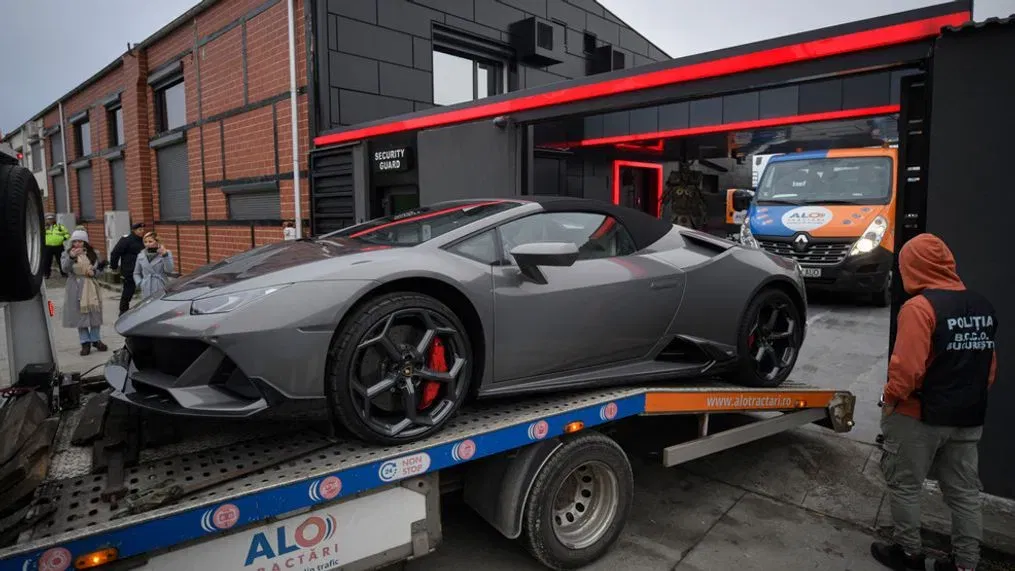
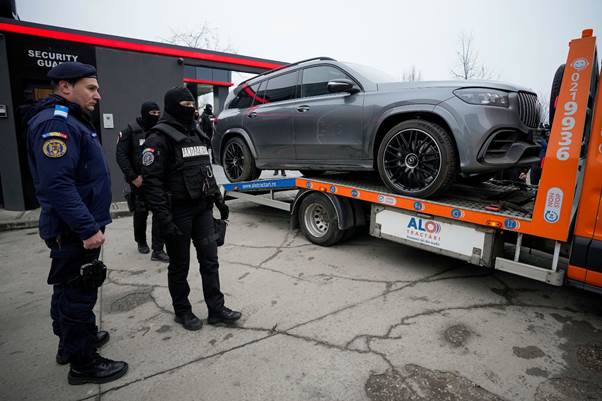
Tate’s image was built in part on his collection of exotic cars, which he often displayed on Instagram, TikTok, and Twitter. Fans questioned whether the collection was legitimate or simply borrowed props for his online empire. That skepticism ended the day cranes and tow trucks rolled up to his compound in Bucharest, hoisting multimillion-dollar vehicles onto flatbeds.
Cars Reportedly Seized
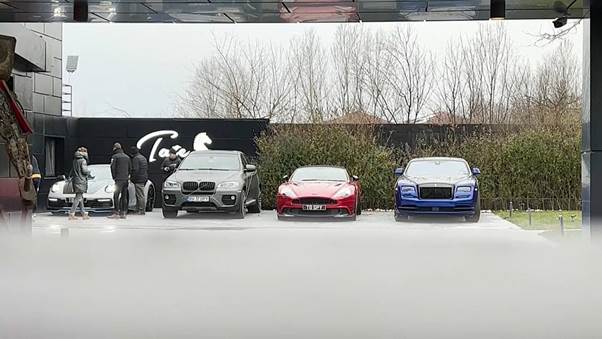
Among the cars taken by Romanian authorities were:
- Rolls-Royce Wraith – synonymous with luxury and elegance, often valued at over $300,000.
- McLaren 765LT – a rare, high-performance supercar worth upwards of $500,000.
- Aston Martin Vanquish S – estimated at $300,000, combining classic styling with modern power.
- Ferrari 812 Superfast – priced near $400,000, capable of reaching over 200 mph.
- BMWs and Mercedes-Benzes – several high-end models, though less flashy than his supercars.
The combined value of vehicles seized, along with watches and other assets, was listed at €3,636,000 — just shy of $4 million USD.
For Romanian police, the collection wasn’t just evidence of wealth. It was potentially evidence of crime.
Why Were the Assets Seized?
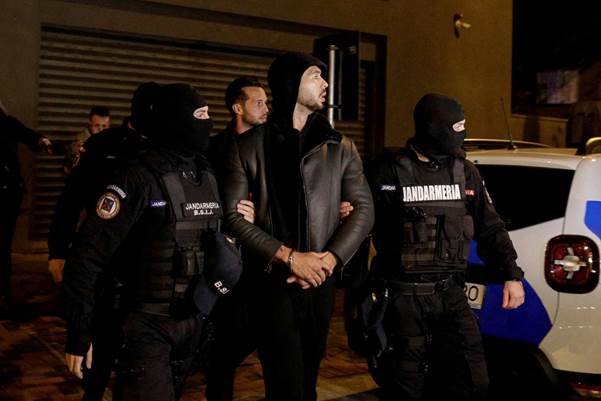
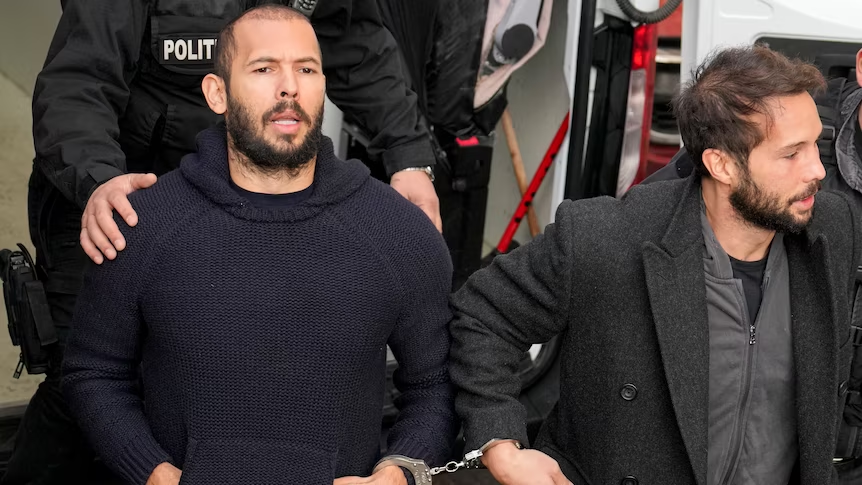
At the time of the seizure, Andrew and Tristan Tate had been arrested alongside two others as part of an investigation into human trafficking, organized crime, and sexual exploitation. Tate denied the charges, but Romanian courts upheld his detention.
Authorities explained that the confiscated cars and valuables might be used as collateral. If Tate and his associates were convicted, the assets could help fund compensation for alleged victims. This is a common practice in cases where authorities suspect that wealth may have been generated through illegal activities.
Though no final verdict had been reached, the seizure signaled that investigators were taking the case — and Tate’s finances — very seriously.
The Image Tate Sold vs. Reality
Andrew Tate’s rapid rise to notoriety wasn’t just about what he said; it was about what he showed. His online persona was built around three pillars:
- Wealth – flaunting cars, jets, and designer goods.
- Masculinity – promoting dominance, toughness, and traditional gender roles.
- Freedom – marketing courses and mentorship programs that promised to help followers escape the “matrix.”
Cars were central to this performance. A Ferrari wasn’t just a Ferrari — it was proof that Tate’s worldview worked. For fans, seeing him step into a Rolls-Royce validated his claims about escaping 9-to-5 jobs and achieving financial independence.
But the seizure blurred the line between image and reality. Suddenly, those cars weren’t just aspirational symbols; they were also potential evidence in a criminal probe.
From Kickboxing to Infamy
Tate’s career began far from internet virality. He rose to prominence in the kickboxing world, winning world championships and building a reputation as a fierce competitor. By the mid-2010s, however, he had transitioned from athlete to media personality.
His first brush with mainstream fame came on the UK reality show “Big Brother” in 2016, from which he was ejected after controversial footage surfaced of him allegedly hitting a woman with a belt. Tate claimed it was consensual role-play, but the incident foreshadowed the controversies that would follow him.
Over time, Tate leaned into an online persona that was deliberately provocative. His statements on women, relationships, and society were often labeled as misogynistic and dangerous, yet they attracted millions of views. For his supporters, he was a truth-teller challenging modern norms. For his critics, he was a dangerous influencer exploiting young men’s insecurities.
The Arrest and Charges
In December 2022, Romanian police raided Tate’s residence as part of a broader investigation into human trafficking and sexual exploitation. Authorities alleged that Tate and his associates lured women into relationships, then coerced them into creating online adult content under exploitative conditions.
Tate denied all wrongdoing, framing his arrest as a political attack designed to silence him. Nevertheless, he was taken into custody, and Romanian courts rejected his appeals for release.
The asset seizure in January 2023 represented a further escalation, showing that investigators were not only scrutinizing his actions but also his financial empire.
Greta Thunberg and the Viral Moment Before the Arrest
Ironically, Tate’s arrest came shortly after one of his most viral online spats. In late December 2022, Tate mocked climate activist Greta Thunberg on Twitter, boasting about his car collection and their “enormous emissions.” Thunberg’s sarcastic reply — “Yes, please do enlighten me. Email me at smalld***energy@getalife.com” — quickly became one of the most liked tweets of all time.
Just days later, Tate was arrested in Romania, leading some to joke that Greta “brought him down.” While Romanian authorities clarified that her tweet played no role in the investigation, the timing cemented the episode in internet lore.
The Role of Asset Seizures in Criminal Cases
Seizing assets in cases of alleged organized crime is standard procedure worldwide. The logic is simple: if suspects are found guilty, victims deserve restitution. Cars, watches, and cash can be auctioned off to fund compensation.
For high-profile figures like Tate, the optics are particularly important. Seeing a McLaren towed away by police sends a clear message: wealth doesn’t shield you from the law.
It also raises a question: how much of Tate’s fortune was genuine business income, and how much may have been tied to activities now under investigation?
The Public Reaction
The seizure sparked mixed reactions online:
- Critics celebrated the downfall of a man they saw as toxic and exploitative.
- Supporters claimed the authorities were targeting Tate unfairly, painting him as a martyr silenced for his views.
- Observers noted the irony that a man who built his brand on showing off cars was now being defined by the image of those same cars being confiscated.
The event highlighted the polarized nature of Tate’s influence: he is either seen as a mentor or a menace, with little middle ground.
Tate’s Business Ventures Beyond Cars
Part of the intrigue surrounding Tate’s wealth is the variety of ventures he claimed to operate. These included:
- The “Hustler’s University” Program – a subscription-based mentorship system promising financial independence through crypto, e-commerce, and freelancing.
- Casinos in Romania – which he claimed were highly profitable investments.
- Webcam Business – previously discussed by Tate himself, though critics argued it exploited vulnerable women.
- Branding and Sponsorships – fueled by his online virality.
The legitimacy and profitability of these ventures remain debated. With assets seized, investigators aimed to determine how much of his wealth stemmed from legal versus illegal activities.
Cars as Collateral: More Than Just Vehicles
For Tate, cars weren’t just machines; they were props in a carefully curated persona. For Romanian authorities, however, they became something else entirely: potential collateral.
If Tate is convicted, his seized cars could be auctioned, their value redistributed to compensate victims. If acquitted, the cars may eventually be returned. Either way, they now represent more than wealth — they represent a tug-of-war between image, legality, and justice.
The Larger Conversation: Wealth, Image, and Influence
Andrew Tate’s case reflects a larger cultural phenomenon. In the age of social media, wealth display has become its own form of content. Jets, yachts, and exotic cars are no longer just luxuries; they are branding tools.
Yet the seizure of Tate’s cars shows the fragility of such branding. When assets vanish, so does part of the image. What remains is the question: was the lifestyle a reflection of genuine success, or a house of cards propped up by questionable foundations?