

When people talk about courtroom television today, names like Judge Judy or Judge Mathis often come up. But long before those personalities became household names, there was Judge Joseph Wapner the pioneer who first brought small-claims court cases into America’s living rooms. With a career that spanned both the real-life courtroom and television, Wapner built a reputation as a no-nonsense, fair-minded judge who valued common sense as much as the law. At the time of his passing in 2017, Joseph Wapner’s net worth was estimated at $8 million, a reflection of his long career in law and his iconic role as the first-ever judge of The People’s Court.
Early Years: From Los Angeles to the Battlefield
Joseph Albert Wapner was born on November 15, 1919, in Los Angeles, California, to Jewish immigrant parents. His father, an attorney, influenced Joseph’s early interest in law and justice, while his mother, Fannie, kept the family grounded in community values. He also had a younger sister, Irene, with whom he shared a close bond.
As a teenager, Joseph attended Hollywood High School, where he lived the life of a typical Southern California student. Among his classmates was a young Lana Turner, who would later become a Hollywood star. After graduating, Joseph pursued higher education at the University of Southern California (USC), completing his bachelor’s degree in 1941.
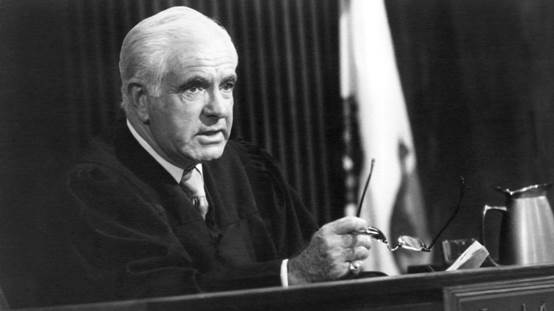
However, like many of his generation, his plans were interrupted by World War II. Wapner served bravely in the South Pacific, where he sustained injuries but also demonstrated leadership and courage. For his service, he earned both a Purple Heart and a Bronze Star, recognitions that shaped his sense of duty and fairness for the rest of his life. After the war, Joseph returned home and continued his studies at USC Law School, graduating in 1948. With law now officially his path, he began building a career that would eventually make him famous.
A Distinguished Career in the Courtroom
Before he became a television figure, Joseph Wapner was very much a real judge with a serious reputation. He practiced law privately for over a decade before his talent caught the eye of California Governor Pat Brown, who appointed him to the Los Angeles Municipal Court in 1959.
Only two years later, he was promoted to the Los Angeles County Superior Court, where he would serve for the next 18 years. His time on the bench was marked by fairness and professionalism, and in 1969 and 1970 he served as the Presiding Judge of the Superior Court. Colleagues respected him not only for his sharp legal mind but also for his ability to keep proceedings efficient and humane.
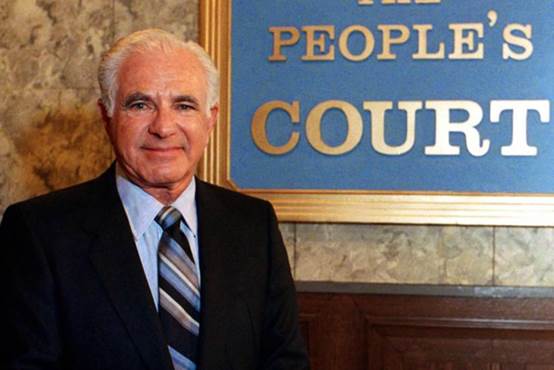
By the late 1970s, Wapner had built a strong judicial career, becoming president of the California Judges Association in 1975. He retired from the court in 1979, not knowing that a completely different kind of career one that would make him a pop culture icon was waiting around the corner.
The People’s Court: Television Fame and Cultural Impact
In 1981, television producers launched a bold experiment: a show called The People’s Court. It was the first arbitration-based reality court program on American television, designed to simulate small-claims court cases in front of a real judge. Wapner was chosen to preside, and from the very first episode, he became a household name.
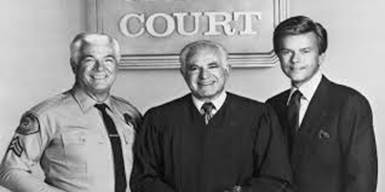
For 12 consecutive seasons (1981–1993), Judge Wapner became the face of justice on daytime TV. His style was firm yet compassionate, balancing legal reasoning with everyday wisdom. Audiences loved watching him cut through excuses and deliver judgments that felt both fair and relatable. His bailiff, Rusty Burrell, and court reporter, Doug Llewelyn, became part of the familiar television family.
Though The People’s Court was canceled in 1993 after ratings dropped, it later returned with new judges. Wapner, however, had already cemented his place in history. He even returned in 2009 for a special guest appearance with Judge Marilyn Milian in honor of his 90th birthday, reminding audiences of the charisma that made him so beloved.
Life Beyond The People’s Court: Media and Family
After his run on The People’s Court, Wapner wasn’t finished with television. From 1998 to 2000, he starred in Judge Wapner’s Animal Court on Animal Planet, where he handled disputes involving pets and animals cases that often brought both humor and heart to the courtroom.
His fame also led to appearances outside the courtroom. He once ruled on a playful case between Johnny Carson and David Letterman on The Tonight Show. He popped up in a 1995 episode of the sci-fi show Sliders, playing an alternate-universe version of himself. He even became the face of a specialty soda, Judge Wapner Cream Soda, produced by Rocket Fizz.
Despite his television fame, Joseph Wapner’s personal life remained grounded. He married Mickey Wapner in 1946, and their marriage lasted over 71 years — a rarity in Hollywood. Together, they had three children: David and Frederick, who both became attorneys, and Sarah, who sadly passed away in 2015.
Wealth, Real Estate, and Lasting Legacy
Joseph Wapner’s career brought him both respect and financial success. At the time of his passing in 2017, his net worth was estimated at $8 million. This wealth came from his decades-long judicial career, television contracts, public appearances, and investments.
One notable purchase was his Los Angeles condo, which he bought in 2000 for $1.45 million. By 2021, the property was valued at $2.6 million, reflecting the growth of LA real estate.
On February 26, 2017, Judge Wapner passed away at the age of 97 due to respiratory failure. He was laid to rest at Mount Sinai Memorial Park Cemetery in Los Angeles, leaving behind a remarkable legacy as both a respected jurist and a television pioneer.
Judge Joseph Wapner was more than just a TV personality he was the man who introduced millions of Americans to the courtroom in a way that was accessible and entertaining. With his sharp legal reasoning, warm presence, and ability to connect with ordinary people, he made justice feel personal. His $8 million net worth was only part of his legacy; the real value of his life lies in how he changed television and influenced generations of courtroom shows that followed.