
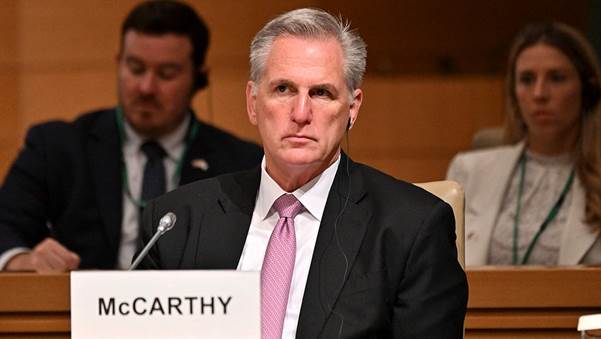
When people think of wealth in American politics, the mind often jumps to billionaires like Donald Trump, tech moguls who dip into politics, or dynastic families whose fortunes stretch across generations. Kevin McCarthy, the California Republican who rose all the way to become the Speaker of the House of Representatives in 2023, doesn’t fit neatly into those categories. His story—and his net worth, estimated at around $300,000 to $500,000 depending on filings—is less about extraordinary financial privilege and more about persistence, connections, and navigating the difficult world of Washington power.
Unlike some of his peers, McCarthy’s financial story isn’t gilded with vast inherited fortunes. Instead, it reflects a life carved out through small business endeavors, modest government salaries, and a political career built on loyalty, survival, and ambition. To understand his net worth today, one has to step back and look at the arc of his life—the small-town roots, the political gambles, the controversies, and the personal sacrifices.

Early Life: A Bakersfield Beginning
Kevin Owen McCarthy was born on January 26, 1965, in Bakersfield, California. Bakersfield is not the kind of place usually associated with political dynasties. It’s a hardworking oil-and-agriculture hub, blue-collar to its core. His father was a firefighter, and his mother worked in public service. This grounded upbringing gave McCarthy a sense of middle-class pragmatism, and unlike some of his contemporaries in Congress, he never projected the air of elite wealth.
As a teenager, McCarthy showed flashes of entrepreneurial spirit. In a story he has told many times, he won $5,000 in a lottery, used it to start a small deli business, and learned what it meant to juggle risk, employees, and customer expectations. That deli didn’t make him rich, but it gave him an early taste of managing money and responsibility—skills that later translated into politics.
This experience shaped his financial outlook. McCarthy wasn’t born into affluence, and though he later entered the orbit of wealthy donors and political allies, his personal finances remained modest compared to the power brokers around him.
From Local to National Politics
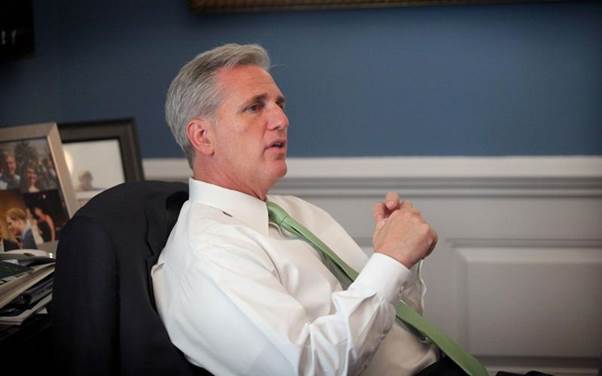
After graduating from California State University, Bakersfield—first with a bachelor’s degree in marketing, then an MBA—McCarthy gravitated toward politics. He started out working for Congressman Bill Thomas, a powerful Republican who chaired the House Ways and Means Committee. That mentorship opened doors and gave McCarthy a front-row seat to how political influence translated into money and policy.
In 2002, McCarthy was elected to the California State Assembly, where he quickly rose to become minority leader. Four years later, he leapt to the U.S. House of Representatives, representing California’s 22nd congressional district. His climb was steady, fueled by an ability to make friends, cut deals, and raise money—a crucial skill in Washington.
Financially, though, his congressional salary was the bedrock of his wealth. Members of Congress earn a base salary of $174,000 per year (slightly more for leadership positions). While that’s a comfortable income, it is hardly the foundation for a billionaire’s lifestyle, particularly for someone with family obligations and California living costs.

Building Net Worth: Salary, Investments, and Public Disclosures
Public servants like McCarthy are required to file financial disclosure reports. These documents don’t reveal exact numbers but instead list assets and liabilities in ranges. McCarthy’s filings over the years have painted a picture of a man with modest wealth by Washington standards.
At various points, his net worth has hovered around $200,000 to $500,000, depending on real estate holdings, retirement accounts, and investment funds. For example:
- Congressional Salary: His primary source of income for nearly two decades.
- Pension and Benefits: As a long-serving lawmaker, McCarthy is entitled to a federal pension, which adds significant long-term value to his financial picture.
- Investments: His disclosures show holdings in mutual funds and retirement accounts, but nothing like the massive stock portfolios of some peers.
- Real Estate: Like many politicians, McCarthy’s most valuable personal asset is tied to property.
Critics have pointed out that McCarthy’s wealth pales compared to political allies like Mitch McConnell or Nancy Pelosi, who boast multimillion-dollar fortunes largely due to stock investments and spousal assets. McCarthy’s relative modesty in wealth has at times been a talking point—casting him as an “everyman” politician, even as he operated at the highest levels of power.
The Role of Donors and Power
One of the paradoxes of McCarthy’s financial life is that, while his personal net worth remains modest, his political fundraising prowess has been enormous. As a party leader, he became one of the GOP’s top fundraisers, pulling in hundreds of millions of dollars for Republican campaigns.
This distinction is important: McCarthy himself is not a billionaire, but he has always been surrounded by billionaires. Oil executives, real estate developers, Silicon Valley conservatives, and national business leaders have backed him. In many ways, his financial influence has been less about what’s in his own bank account and more about his ability to direct donor money strategically.
Speaker of the House: Prestige Without a Pay Bump
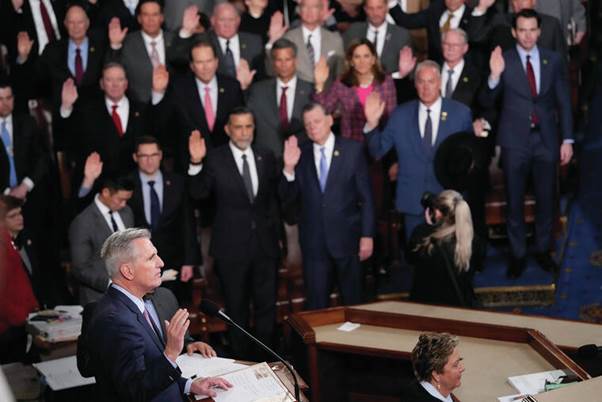
When McCarthy finally achieved his dream in January 2023—after a dramatic, drawn-out Speaker vote that went to 15 rounds—he secured one of the most powerful positions in American politics. The Speaker of the House is second in line to the presidency and controls the chamber’s legislative agenda.
But financially? The Speaker earns only a slight bump in salary: $223,500 per year. In Washington, that’s a comfortable income but not life-changing wealth. Compare that to private sector roles—where former lawmakers can earn millions as lobbyists, consultants, or corporate board members—and it’s clear that McCarthy’s personal finances were not transformed simply by holding the gavel.
Controversies and Financial Scrutiny
With power comes scrutiny, and McCarthy has had his share. Critics have sometimes raised questions about his financial disclosures, though no major scandals have stuck to him personally. His political survival, however, has often depended on balancing the expectations of wealthy donors with the populist rhetoric demanded by his party’s base.
In October 2023, McCarthy was ousted as Speaker after a revolt from within his own party—the first time in U.S. history that a Speaker was removed mid-term. That loss of position also meant the loss of influence and fundraising power. While his salary remained the same, his ability to command donor attention diminished, and speculation began about whether he would follow the path of many ex-lawmakers: turning to the private sector for a more lucrative career.
What Comes Next? The Post-Congressional Fortune
History suggests that McCarthy’s most lucrative financial years may not come until after his congressional career ends. Many former House Speakers and leaders have cashed in on their political connections through lobbying, consulting, or think-tank positions. For instance, former Speaker John Boehner joined a law firm and sat on corporate boards, dramatically increasing his net worth after leaving office.
For McCarthy, similar opportunities abound. Even if his personal net worth today is relatively modest compared to America’s richest politicians, the Rolodex he has built—spanning corporate America, major donors, and international leaders—is worth a fortune in the private sector.
If McCarthy follows this well-worn path, his current net worth of under a million could balloon into many millions within just a few years.
Personal Life: Grounded but Public
While McCarthy’s political career has been highly visible, his personal financial life has remained relatively low-profile. He married his high school sweetheart, Judy McCarthy, and the couple has two children. Unlike some political families who flaunt wealth, the McCarthys have generally projected a relatable, middle-class lifestyle.
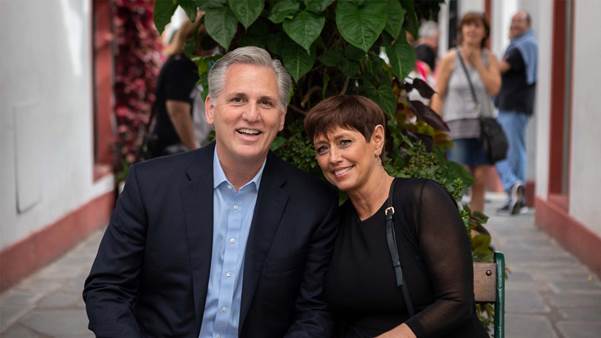
That image has served him well politically, especially when appealing to voters in California’s conservative Central Valley. Still, critics argue that proximity to billionaires and corporate donors blurs the line between modest personal wealth and enormous political clout.
The Contrast Between Power and Wealth
Kevin McCarthy’s story underscores a strange reality of American politics: one can wield incredible influence without necessarily amassing great personal fortune. As Speaker, McCarthy held one of the most powerful jobs in the world, able to shape legislation, foreign policy, and the national agenda—yet his personal finances ranked far below many of his colleagues.
In fact, his relatively low net worth has sometimes been spun as an asset, painting him as more connected to everyday Americans than multimillionaire lawmakers. At the same time, his reliance on donors has opened him to criticism that while he may not be wealthy himself, his career has been bankrolled by wealth.
Legacy in the Making
Kevin McCarthy’s net worth may not place him in the same category as America’s wealthiest politicians, but wealth alone doesn’t define his legacy. His career trajectory—from small-town deli owner to the pinnacle of congressional power—illustrates both the possibilities and the compromises of political life.
Financially, McCarthy remains relatively modest compared to the billionaires who orbit American politics. But his story is a reminder that in Washington, access to power and proximity to money often matter more than personal bank balances.
Whether McCarthy decides to stay in politics, transition into the private sector, or reinvent himself entirely, one thing is certain: his financial future remains closely tied to the networks he has built over decades. For now, Kevin McCarthy stands as an example of how influence in America doesn’t always equal wealth—but can certainly lead to it, depending on the choices he makes next.