

When people hear the name Masaharu Morimoto, most instantly recall the dramatic battles on Iron Chef or his dazzling performances on Iron Chef America. With his sharp knives, quick hands, and elegant plating, Morimoto brought Japanese cuisine into living rooms across the world. But behind the cameras and the flashy dishes lies the story of a man who has carefully built an $18 million net worth, transforming his identity from a young baseball dreamer in Hiroshima to an international culinary mogul.
Unlike celebrity chefs who rely solely on television appearances, Morimoto has built his wealth through a multi-pronged empire: award-winning restaurants in cities like New York, Philadelphia, Tokyo, and Las Vegas; cookbooks and sake lines; constant television work; and high-end endorsements. His fortune is the product of artistry and entrepreneurship, demonstrating how a chef can become not just a craftsman, but also a global brand.
This deep dive explores exactly how Morimoto earned his millions, tracing the rise of a man who turned Japanese culinary tradition into a global phenomenon while maintaining authenticity and showmanship.
Early Life and Culinary Beginnings: From Hiroshima to the Kitchen
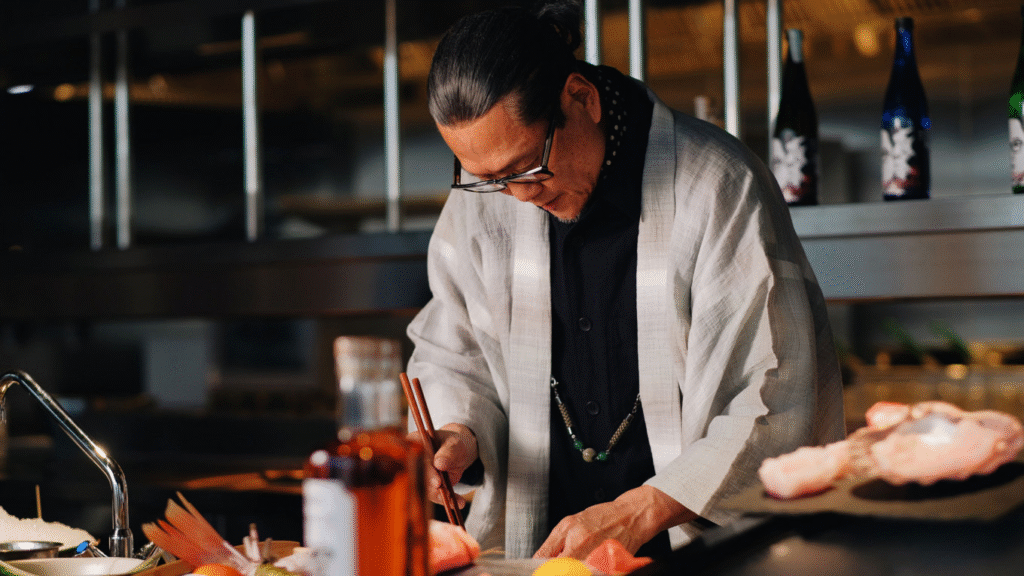
Born on May 26, 1955, in Hiroshima, Japan, Masaharu Morimoto’s first dream was not of food but of professional baseball. A talented catcher, he envisioned a career in Japan’s top leagues. But fate had other plans: a shoulder injury in his youth ended his baseball aspirations, forcing him to reinvent himself at an early age.
It was this pivot that changed his life forever. Seeking a new purpose, Morimoto turned his discipline and focus toward food. He studied the fundamentals of Japanese cuisine, immersing himself in kaiseki (traditional multi-course dining) and sushi preparation. These early years were demanding—Japanese culinary training is famously rigorous, requiring apprentices to spend years perfecting tasks as simple as washing rice or cutting vegetables before being allowed near the fish.
This background instilled in him a respect for precision, discipline, and detail, traits that later became his signature on Iron Chef.
By his mid-20s, Morimoto had earned a reputation in Hiroshima as a gifted young chef, but he wanted more. He envisioned spreading Japanese cuisine to the world. In 1985, he made a bold move: immigrating to the United States, where Japanese food was still considered exotic. This risk was the seed of his $18 million fortune.
Breaking Through in America: From Sushi Bars to Nobu
When Morimoto arrived in the U.S., Japanese cuisine was gaining popularity, but true authenticity was rare. He worked in several restaurants before landing a transformative position: Head Chef at Nobu in New York City.
At Nobu, one of the world’s most prestigious Japanese-fusion restaurants founded by chef Nobu Matsuhisa and backed by actor Robert De Niro, Morimoto helped craft dishes that blended traditional Japanese flavors with global influences. His innovative style—combining raw fish with unexpected ingredients like foie gras, jalapeños, or olive oil—was a revelation to many American diners.
His tenure at Nobu not only refined his approach but also gave him international exposure, establishing him as a culinary innovator. This platform was crucial when television came calling.
The Iron Chef Era: Fame, Exposure, and Global Recognition
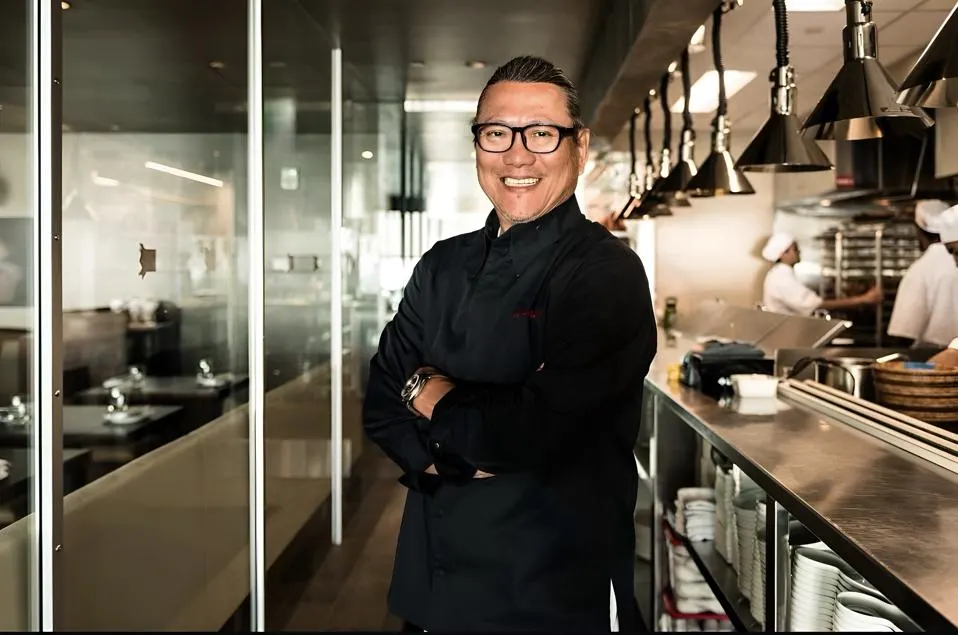
Morimoto’s true breakthrough came in 1998 when he was recruited for the Japanese television program Iron Chef. Replacing Iron Chef Japanese Koumei Nakamura, he quickly stood out as “Iron Chef Japanese,” clad in his signature silver chef’s jacket and headband.
On the show, Morimoto faced weekly “Kitchen Stadium” battles against top chefs from around the world. His cooking was not only technically flawless but also dramatic and artistic, winning over both Japanese and international audiences.
He became known for his fusion techniques—pairing Japanese traditions with Western creativity. For example, he would prepare toro (fatty tuna) tartare with caviar or serve sashimi with unusual sauces, challenging traditional culinary boundaries.
This fame carried over to the U.S. when Iron Chef America launched in 1999 on the Food Network. Morimoto became one of the most beloved Iron Chefs, competing against personalities like Bobby Flay and Mario Batali. These appearances not only earned him substantial television income but also skyrocketed his marketability, laying the groundwork for his global restaurant empire.
Restaurant Empire: The Foundation of His $18 Million Net Worth
Television made Morimoto famous, but it is his restaurants that made him wealthy. Today, his name is synonymous with upscale Japanese dining, and his restaurants are among the most profitable in the industry.
Key Restaurant Ventures
- Morimoto New York (2006–2020)
His flagship restaurant, located in Manhattan’s Meatpacking District, was a critical and commercial success. Designed by architect Tadao Ando, it set the tone for his brand: modern, sleek, and innovative. - Morimoto Philadelphia (2001–present)
His first U.S. restaurant, this location was pivotal. It proved that fine-dining Japanese fusion could succeed outside New York or Los Angeles, drawing food critics and celebrities alike. - Other U.S. Locations
- Morimoto Las Vegas
- Morimoto Napa
- Morimoto Waikiki
- Morimoto Asia at Disney Springs (Orlando, Florida)
Each of these generates millions annually, benefiting from both tourism and high-end dining markets.
- International Expansion
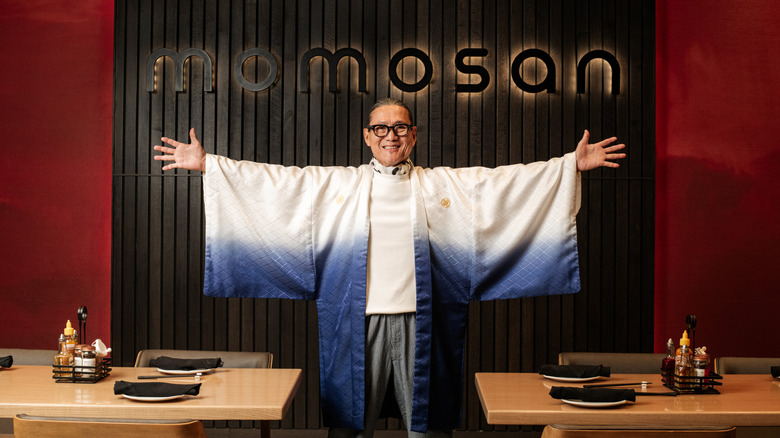
Morimoto has also opened restaurants in Tokyo, New Delhi, Doha, Mexico City, and Dubai, among others. These international ventures not only diversify his revenue but also reinforce his status as a global brand.
Revenue from Restaurants
High-end restaurants like Morimoto’s typically generate $5–10 million in gross revenue per year per location, depending on city and foot traffic. With multiple outlets across the globe, Morimoto’s restaurant empire is estimated to account for the majority of his $18 million fortune, providing both steady income and long-term brand value.
Other Ventures: Sake, Cookbooks, and Endorsements
Morimoto’s business savvy extends beyond restaurants.
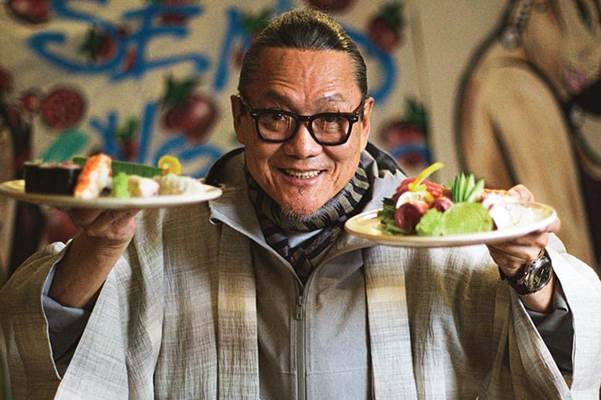
- Morimoto Sake Line: He has partnered with brewers to create his own line of premium sake, sold in the U.S. and Japan. This provides an additional revenue stream while promoting Japanese drinking culture.
- Cookbooks: His publications, such as Morimoto: The New Art of Japanese Cooking, have been critically acclaimed and commercially successful.
- Endorsements & Appearances: Morimoto frequently collaborates with high-profile brands, makes guest chef appearances, and participates in food festivals worldwide. Each appearance can earn tens of thousands of dollars.
These ventures, while secondary to his restaurants, have contributed significantly to his net worth.
Media Appearances: Beyond Iron Chef
In addition to Iron Chef, Morimoto has appeared on numerous shows:
- Top Chef
- Hell’s Kitchen
- The Next Iron Chef
- Guest roles on Anthony Bourdain: No Reservations
His charismatic presence and recognizable style make him a go-to figure for television producers, ensuring both visibility and income.
Personal Life: The Man Behind the Chef
Despite his fame, Morimoto is known for leading a relatively private life. He is married to Keiko Morimoto, and together they have maintained a low-profile family life away from constant media attention.
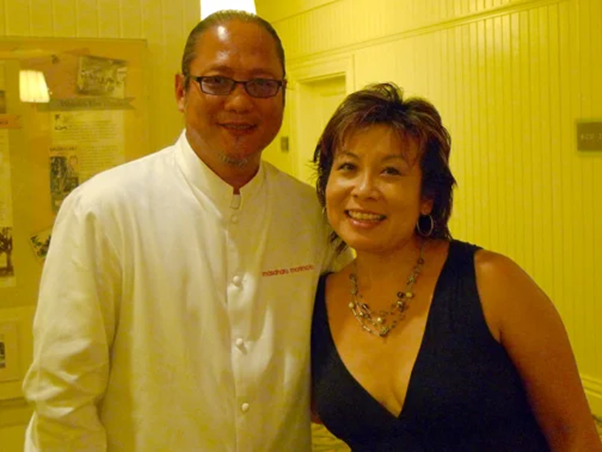
He is also deeply connected to Japanese culture. Morimoto remains a lifelong fan of baseball and is an avid collector of baseball memorabilia. His passions extend into art, design, and architecture, which is reflected in the sleek aesthetics of his restaurants.
Philanthropy: Giving Back
Morimoto has not only built wealth but also given back. He supports:
- Culinary education programs for aspiring chefs.
- Disaster relief efforts in Japan, especially following the 2011 earthquake and tsunami.
- Food-related charities, promoting awareness about healthy eating and sustainability.
His philanthropy adds another dimension to his legacy, showing that his success is not just financial but also cultural and humanitarian.
Masaharu Morimoto Net Worth: A Financial Breakdown
So how exactly is Morimoto’s $18 million net worth structured?
- Restaurants: ~$12–14 million (equity, profits, brand value)
- TV & Media: ~$2–3 million (Iron Chef, Food Network, guest appearances)
- Cookbooks & Publishing: ~$500,000–$1 million
- Sake & Product Lines: ~$1–2 million
- Endorsements & Events: ~$1–2 million
Unlike actors or athletes, chefs often build wealth through slow, consistent growth rather than sudden windfalls. For Morimoto, his fortune is the product of three decades of relentless work, smart brand expansion, and global recognition.
Net Worth Growth Over Time
- 2000: ~$1 million (early Iron Chef fame)
- 2005: ~$3 million (Philadelphia & New York restaurants open)
- 2010: ~$7 million (multiple U.S. restaurants, steady TV presence)
- 2015: ~$12 million (international expansion, cookbook success)
- 2023: ~$18 million (restaurant empire fully global)
Legacy: More Than Just Money
Morimoto’s $18 million fortune represents more than wealth—it is the embodiment of his role as a cultural ambassador. He has:
- Introduced millions of Western diners to Japanese cuisine.
- Elevated sushi and sake from niche specialties to global dining staples.
- Inspired a generation of young chefs to experiment with fusion and creativity.
His legacy is not only measured in dollars but also in the global respect he has brought to Japanese food traditions.
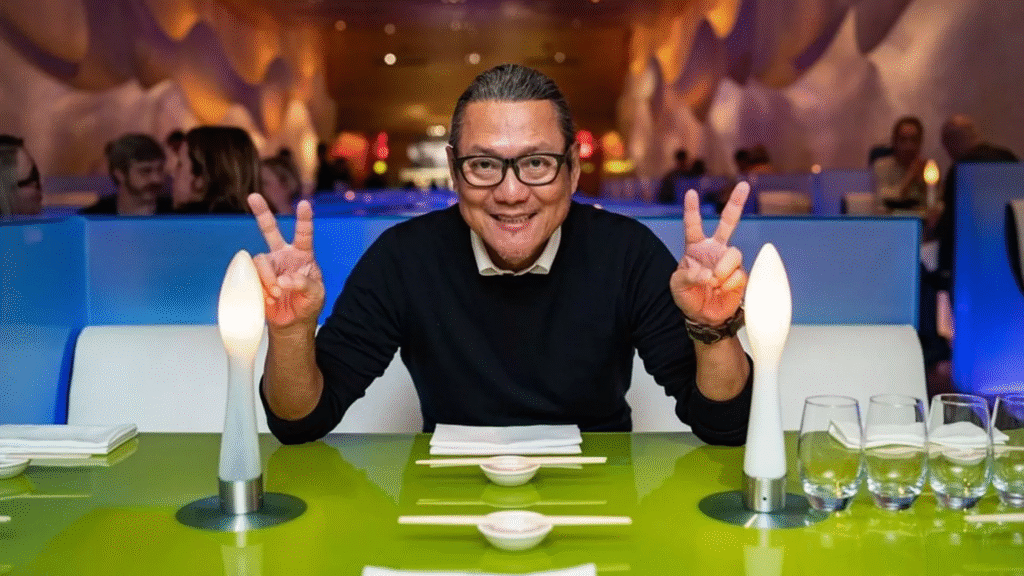
Masaharu Morimoto’s story is one of resilience, creativity, and vision. From a young boy in Hiroshima whose baseball career ended too soon, he transformed himself into one of the most famous chefs on the planet. His $18 million net worth is the product of relentless work ethic, innovative cooking, and an ability to seize opportunities on television, in publishing, and in global business.
In a world where celebrity chefs come and go, Morimoto has endured for decades, building not just restaurants but a brand that embodies excellence. His fortune is not just financial—it is cultural, symbolic of how one man’s knives and imagination could bridge East and West, tradition and innovation.
Simply put, Masaharu Morimoto is not just worth $18 million in money—he is worth infinitely more in culinary history.