
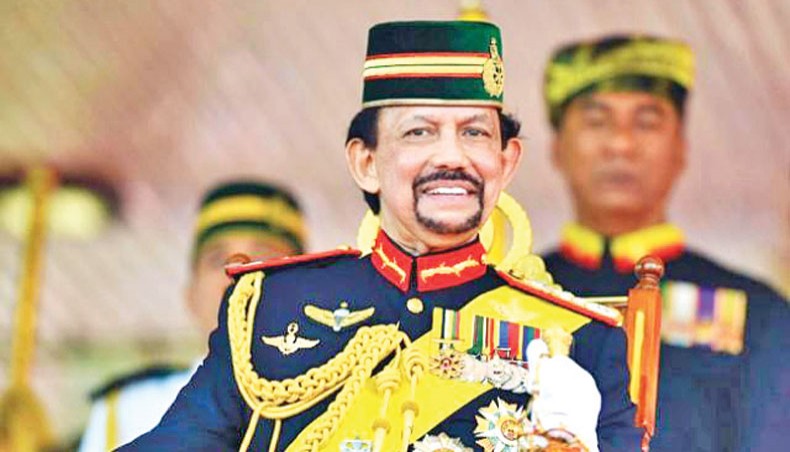
When it comes to wealth, few royals command the same aura of extravagance and influence as Hassanal Bolkiah, the 29th Sultan of Brunei. With an estimated net worth of $30 billion, the Sultan is not only one of the world’s richest monarchs but also a symbol of a bygone era when oil wealth could transform a tiny Southeast Asian nation into a land of extraordinary luxury.
From his gold-plated palaces to one of the largest private car collections in the world, the Sultan’s fortune is legendary. Yet behind the opulence lies a story of oil, politics, and tradition that has shaped Brunei and its ruler for more than half a century.

Early Life and Path to the Throne
Hassanal Bolkiah was born on July 15, 1946, in Bandar Seri Begawan, the capital of Brunei, then a British protectorate. He is the eldest son of Sultan Omar Ali Saifuddien III, who abdicated in 1967, passing the throne to his son at just 21 years old.
Educated at Victoria Institution in Kuala Lumpur and later at the Royal Military Academy Sandhurst in England, Bolkiah was groomed for leadership from an early age. His ascension coincided with a pivotal period in Brunei’s history, as the nation prepared for eventual independence from Britain (achieved in 1984).
The Source of Wealth: Oil and Gas
The Sultan’s immense fortune is rooted in Brunei’s vast petroleum and natural gas reserves. The small nation, located on the island of Borneo, sits on some of the richest oil fields in Southeast Asia.
Key Drivers of Wealth
- Brunei Shell Petroleum (BSP): A joint venture between the Brunei government and Royal Dutch Shell, BSP accounts for the majority of the nation’s oil production and exports.
- Hydrocarbon Dominance: Oil and gas contribute to over 90% of Brunei’s GDP and government revenues.
- Sovereign Wealth Fund: The Brunei Investment Agency (BIA), established in 1983, manages billions in global assets, including real estate, hotels, and equities.
As the absolute monarch, the Sultan has direct control over the nation’s wealth, which is why his personal fortune is inseparable from Brunei’s national prosperity.

Palatial Lifestyle
The Sultan’s net worth is most visible in his extraordinary lifestyle, which blends traditional monarchy with modern excess.
Istana Nurul Iman Palace
The Sultan’s official residence, Istana Nurul Iman, is often described as the largest residential palace in the world.
- Size: Over 2.15 million square feet.
- Rooms: More than 1,700 rooms and 257 bathrooms.
- Banquet Hall: Can accommodate 5,000 guests.
- Mosque: Houses a private mosque for 1,500 worshippers.
Built at a cost of $1.4 billion in 1984, the palace is both a royal home and the seat of government.
Car Collection
The Sultan’s car collection is legendary, with estimates of 5,000–7,000 vehicles, worth billions collectively. Highlights include:
- Over 600 Rolls-Royces.
- More than 300 Ferraris.
- A rare fleet of custom-built Bentleys, Jaguars, and Aston Martins.
This makes him arguably the largest car collector in the world.

Private Jets
The Sultan owns multiple aircraft, including a Boeing 747-400 customized with solid gold details and marble interiors. Nicknamed the “Flying Palace,” the jet alone is worth hundreds of millions.
Yachts
His luxury yacht, Serene, has been among the world’s most expensive, featuring pools, helipads, and lavish interiors.
Family and Royal Responsibilities
The Sultan has been married three times and has twelve children, including his heir apparent, Crown Prince Al-Muhtadee Billah. His family members hold significant roles in government and business, reinforcing the monarchy’s dominance in Brunei’s affairs.
As both head of state and head of government, the Sultan oversees all aspects of governance, including defense, foreign policy, and the economy.

Religion and Governance
Hassanal Bolkiah is known for his deep commitment to Islam and the implementation of Sharia law in Brunei.
In 2014, the Sultan announced the full adoption of a Sharia penal code, sparking global controversy. Critics condemned the laws as regressive, while supporters in Brunei praised the Sultan’s dedication to Islamic values.
Despite international criticism, Bolkiah’s policies reflect his determination to maintain Brunei’s unique identity as a wealthy Islamic monarchy.
Philanthropy and Generosity
Though often portrayed as extravagant, the Sultan has also been generous with his nation’s wealth:
- Free Education: Brunei citizens enjoy free education, including university scholarships abroad.
- Free Healthcare: The state provides comprehensive healthcare to its citizens.
- Subsidized Housing: Government programs assist families in acquiring affordable homes.
- No Personal Taxes: Brunei is one of the few nations with no personal income tax, funded by oil wealth.
These policies have ensured a relatively high standard of living for Brunei’s small population (just over 450,000 people).
Net Worth Breakdown: $30 Billion
The Sultan’s wealth is diversified across several assets:
- Oil and Gas Revenues – Billions annually from Brunei Shell Petroleum.
- Brunei Investment Agency (BIA) – Manages more than $60 billion globally, including stakes in luxury hotels such as the Dorchester Collection in London and Paris.
- Real Estate – Palaces, estates, and prime properties worldwide.
- Luxury Assets – Cars, jets, yachts, jewelry, and art.
- Gold Reserves – Brunei holds substantial reserves, adding to the Sultan’s personal fortune.
While Forbes estimates fluctuate, most agree the Sultan’s personal net worth sits around $30 billion—though some argue his effective control of the Brunei Investment Agency makes his true influence even greater.
Comparison with Other Royals
The Sultan of Brunei ranks among the wealthiest royals in the world:
- King Salman of Saudi Arabia – ~$20 billion.
- Emir of Qatar (Sheikh Tamim bin Hamad Al Thani) – ~$2 billion personally, but his family collectively controls hundreds of billions.
- King Maha Vajiralongkorn of Thailand – ~$40–45 billion (via Crown Property Bureau).
- Sultan of Brunei – ~$30 billion.
This places Hassanal Bolkiah firmly in the top tier of global royal wealth, alongside monarchs of Thailand and Saudi Arabia.
Criticism and Challenges
Despite immense wealth, the Sultan has faced criticism:
- Human Rights Concerns: Implementation of Sharia punishments, such as stoning for adultery, has drawn international outrage.
- Over-Reliance on Oil: Brunei’s economy is heavily dependent on hydrocarbons, raising concerns about sustainability as global energy shifts toward renewables.
- Lavish Spending: Extravagant personal expenditures often contrast with growing calls for economic diversification and modernization.
Nonetheless, his popularity remains relatively strong within Brunei, where citizens benefit from welfare policies financed by oil.

Future Outlook
As the world moves toward renewable energy, Brunei faces challenges in maintaining its oil-dependent wealth. The Sultan has emphasized investment diversification through the BIA, but whether it will sustain the nation’s prosperity in a post-oil world remains to be seen.
For now, the Sultan continues to reign as one of the most wealthy and powerful monarchs alive, balancing tradition, luxury, and the responsibilities of governance.
The Sultan of Brunei’s $30 billion net worth reflects both the opportunities and contradictions of modern monarchy. His wealth, derived from oil and gas, has allowed him to live a life of unprecedented luxury—palaces with gold ceilings, fleets of Rolls-Royces, private jets outfitted in marble, and a car collection unrivaled anywhere.
Yet he is also a ruler who has maintained stability, provided for his people, and upheld Brunei’s identity on the world stage. Love him or criticize him, Hassanal Bolkiah remains a symbol of absolute power in an age where such monarchies are increasingly rare.
For the Sultan, wealth is not just a number—it is the foundation of authority, tradition, and a legacy that stretches across Brunei’s history and into its uncertain future.