

Trent Reznor is an artist who has spent his entire career defying categorization. He is the searing, visceral voice of a generation who dragged industrial rock into the mainstream with Nine Inch Nails. He is a prestige, Oscar-winning composer whose haunting soundscapes have become as iconic as the films they inhabit. And he is a forward-thinking tech visionary who helped shape the very platforms we use to consume music today.
With a net worth estimated at a formidable $80 million, Trent Reznor’s fortune is a direct reflection of his relentless innovation. This is not the simple story of a rock star who sold millions of albums and toured the world—though he certainly did that. His wealth was built through a masterful and strategic expansion of his artistic and professional life, creating a three-pronged empire of rock and roll, film composition, and music technology.
His journey is a masterclass in artistic evolution, from the primal scream of his early work to the sophisticated tension of his film scores and his influential role in Silicon Valley. This is the story of how the architect of industrial rock built a diverse and enduring financial legacy.
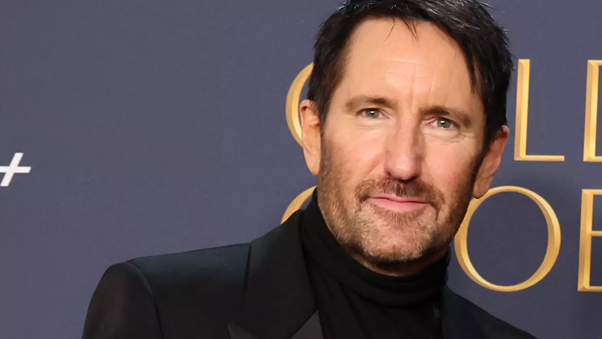
The Industrial Revolution – The Nine Inch Nails Empire
The foundation of Trent Reznor’s career and wealth is, and always will be, Nine Inch Nails (NIN). In the late 1980s, while working as a janitor and engineer at a recording studio in Cleveland, Ohio, Reznor began writing and recording his own material. The result was “Pretty Hate Machine” (1989), a groundbreaking debut album that fused the abrasive textures of industrial music with the hooks of synth-pop. The album was a slow-burn success, eventually going triple-platinum and establishing NIN as a powerful new force in music.
However, it was the 1994 masterpiece, “The Downward Spiral,” that catapulted Reznor into superstardom and became the financial bedrock of his entire career. A dark, sprawling concept album recorded in the infamous house where the Manson Family committed the Tate murders, it was a cultural and commercial phenomenon. The album sold over four million copies in the U.S. alone and produced the iconic single “Closer,” whose provocative music video was in constant rotation on MTV.
The financial structure of Nine Inch Nails is key to understanding Reznor’s wealth. For much of the band’s history, NIN was, for all intents and purposes, Trent Reznor. He was the sole official member, the songwriter, the producer, and the visionary. This meant that unlike in a traditional band structure where profits are split four or five ways, Reznor retained the vast majority of the earnings from:
- Album Sales: With over 20 million records sold worldwide, the revenue from his studio albums, particularly the multi-platinum success of “The Downward Spiral” and its ambitious follow-up “The Fragile,” was immense.
- Songwriting and Publishing: As the principal songwriter, he owns the lucrative publishing rights to his entire catalog. Every time a NIN song is streamed, used in a movie, or played on the radio, he earns a royalty.
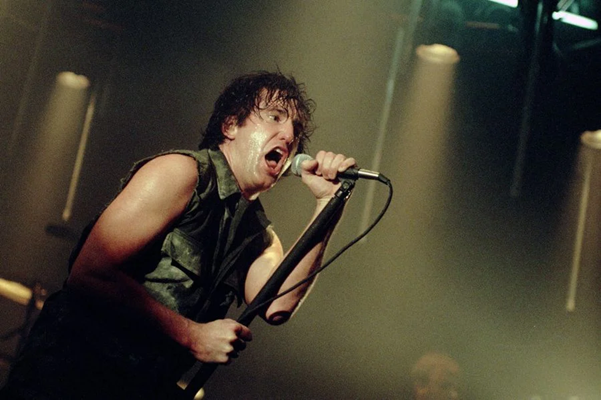
- Touring: NIN has been a major global touring act for three decades. Their live shows are legendary for their intense energy and stunning visual production. As the headliner, Reznor commanded the largest share of the substantial profits from ticket and merchandise sales.
The Nine Inch Nails brand alone, built over thirty years of critical and commercial success, is a multi-million dollar entity that continues to tour and release music, providing a consistent and powerful income stream.

The Hollywood A-Lister – A New Career in Composition
Just as many of his 90s rock contemporaries began to fade into legacy-act status, Trent Reznor executed one of the most remarkable second acts in music history. He transformed himself from an industrial rock icon into an Oscar-winning, A-list film composer. This new career path not only earned him a new level of critical prestige but also opened up an incredibly lucrative new revenue stream.
His long-running creative partnership with English musician and producer Atticus Ross (who would later become an official member of NIN) became the vehicle for this transformation. Their big break came when director David Fincher, a longtime NIN fan, tapped them to score his 2010 film, “The Social Network.”
Their dark, ambient, and unsettling electronic score was a revelation. It perfectly captured the psychological tension and moral ambiguity of the Facebook origin story. The score was a critical sensation, earning Reznor and Ross a Golden Globe and, stunningly, the Academy Award for Best Original Score. This win was a game-changer. It catapulted them from “rock stars dabbling in film” to elite, in-demand composers.
The Oscar win opened the floodgates, and they became the go-to composers for prestige, auteur-driven cinema. Their major works include:
- “The Girl with the Dragon Tattoo” (2011): Another collaboration with David Fincher, this chilling and complex score earned them a Grammy Award.
- “Gone Girl” (2014): Their third Fincher collaboration produced a deeply unsettling score that was lauded by critics.
- “Watchmen” (2019): Their score for the acclaimed HBO series earned them an Emmy Award, completing their unofficial EGOT (Emmy, Grammy, Oscar, Tony) of major scoring awards.
- “Mank” (2020): A fourth project with Fincher, for which they received another Oscar nomination.
- “Soul” (2020): In a surprising but brilliant move, they were hired by Pixar to compose the ethereal, electronic score for the film’s “Great Before” sequences. This work won them their second Academy Award.
Working as an A-list film composer is an extremely profitable endeavor. Top-tier composers can command fees ranging from high six-figures to well over a million dollars per film. With two Oscars and a resume packed with critically acclaimed hits, Reznor and Ross are at the very top of that list, and their scoring work now represents a major pillar of Reznor’s overall net worth.
The Tech Visionary – From Beats to Apple
What truly sets Trent Reznor apart from nearly every other musician of his era is his deep and lucrative involvement in the tech industry. He didn’t just comment on the changing music landscape; he actively helped build it.
His journey into Silicon Valley began with Beats Music, the streaming service launched by Dr. Dre and Jimmy Iovine. Reznor was brought on as the Chief Creative Officer, a high-level executive role where he was tasked with overseeing the creative direction and user experience of the platform. He was instrumental in developing the service’s curated playlist feature, a human-centric approach to music discovery that set it apart from algorithm-only competitors.
His position became even more significant in 2014 when Apple acquired Beats for a staggering $3 billion. As part of the acquisition, Reznor and the Beats Music team were brought into Apple to help develop and launch their new streaming service, Apple Music. He played a key role in the design and philosophy of the platform, continuing his focus on human curation.
This was not a simple consultancy gig; it was a full-fledged executive career. His work with Beats and Apple provided him with a substantial executive salary, and it’s widely speculated that his position with Beats likely included stock options that would have paid out handsomely upon the Apple acquisition. This chapter of his career provided a massive, non-traditional income stream that is almost unheard of for a rock star.
Furthermore, Reznor had already proven his forward-thinking approach with his own music. In 2007, after leaving his major label, he released the NIN album “Ghosts I-IV” independently online, with options for fans to download it for free or purchase deluxe physical editions. This innovative, direct-to-fan model predated platforms like Bandcamp and demonstrated his deep understanding of the future of music distribution long before he joined Beats.
The Sound of Play – A Legacy in Gaming and Production
Even before his film scoring career took off, Trent Reznor made a groundbreaking contribution to another medium: video games. In 1996, he and Nine Inch Nails were hired to create the entire soundscape and score for the id Software game, “Quake.”
This was not the typical bleep-and-bloop video game music of the era. Reznor delivered a dark, ambient, and terrifying industrial soundscape that was as crucial to the game’s horror atmosphere as the visuals. The Quake soundtrack is considered a landmark achievement that revolutionized video game music, treating it with the same artistic seriousness as a film score. It became a cultural touchstone for a generation of gamers and demonstrated Reznor’s ability to apply his unique sonic signature to diverse media.
Beyond his own projects, Reznor has also lent his talents as a producer to other artists, including Saul Williams and Halsey, and formed the side project How to Destroy Angels with Atticus Ross and his wife, Mariqueen Maandig. While not as commercially massive as his other ventures, these projects further diversify his creative portfolio and income streams.

The Master Architect
Trent Reznor’s $80 million net worth is the financial result of a career built on ferocious creativity, fearless evolution, and uncanny business acumen. He is a rare artist who has achieved the highest levels of success in three distinct and highly competitive fields.
He built an empire with Nine Inch Nails, creating a brand and a catalog that remains a potent cultural and commercial force. He then pivoted to become one of the most respected and sought-after film composers in Hollywood, earning two Oscars and the immense fees that come with that status. And in a move that set him apart from all others, he became a key player in Silicon Valley, helping to shape the very streaming services that define the modern music industry.
He is the architect of his own sound, his own image, and his own remarkable career. Trent Reznor has proven that it’s possible to be a true artist who never compromises, while simultaneously being a brilliant strategist who is always three steps ahead of the curve.