

In the glittering, often fickle universe of celebrity, power is a currency that fluctuates wildly. It can be measured in box office returns, streaming numbers, follower counts, or the ephemeral buzz of a viral moment. By these metrics, names rise and fall, stars ignite and fade. But then there is Oprah Winfrey. To measure her power by conventional means is to miss the point entirely. For decades, Oprah has wielded a different, more profound kind of influence—one that isn’t just transactional, but transformational. It’s a power built not on an untouchable pedestal of fame, but on a foundation of shared vulnerability, radical empathy, and an unwavering belief in the potential that lies within every human story. She remains one of the most powerful figures in the world not just because of what she has built, but because of how she has connected.
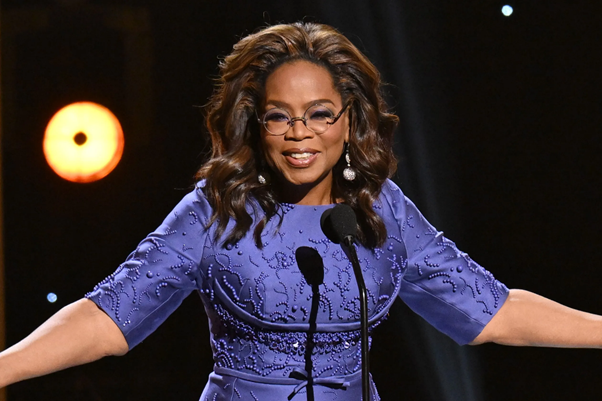
At the heart of Oprah’s legacy is the revolution she started in a television studio. The Oprah Winfrey Show, which ran for an astonishing 25 years, was more than a talk show; it was a cultural institution. It became the nation’s living room, its therapist’s office, and its confessional booth. In an era before social media, Oprah created a space for raw, unfiltered conversation on a national scale. She didn’t just interview people; she bore witness to their pain, their joy, their shame, and their triumphs. By courageously sharing her own deeply personal struggles—with childhood abuse, with her weight, with insecurity—she shattered the fourth wall of television and the carefully constructed artifice of celebrity. She gave her audience permission to be vulnerable by being vulnerable herself.
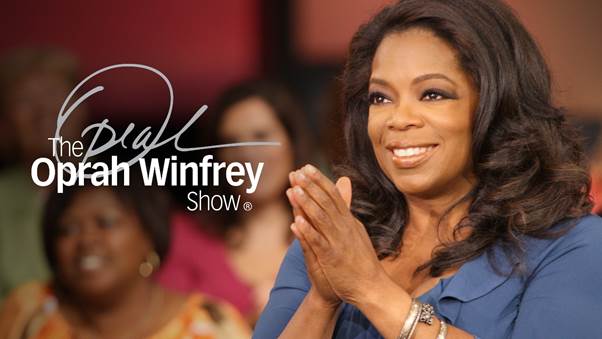
This wasn’t just groundbreaking television; it was a fundamental shift in how we communicate. She taught a global audience the language of empathy. When she cried with a guest, millions cried with her. When she celebrated a breakthrough, millions felt that victory as their own. This ability to forge genuine, human-to-human connections through a camera lens is a rare gift, and it is the bedrock of her enduring influence. Even today, long after her daily show has ended, she remains the world’s preeminent conversationalist. When Prince Harry and Meghan Markle had a story to tell, they told it to Oprah. When the world grapples with complex issues like the rise of artificial intelligence, she hosts specials to guide the conversation. She remains the trusted anchor in a sea of noise, the person we turn to when we need not just to hear, but to understand.
This profound trust has given rise to the “Oprah Effect,” a phenomenon that economists and marketers have studied for decades. It is most famously demonstrated through her Book Club. An endorsement from Oprah doesn’t just increase a book’s sales; it catapults an author from obscurity to the top of bestseller lists overnight, changing their life and career in an instant. But to see this merely as a powerful recommendation is to underestimate its significance. It is a transmission of trust. Her audience believes that she is not just selling a product, but sharing an experience that moved her, that enlightened her, that she genuinely believes will enrich their lives.
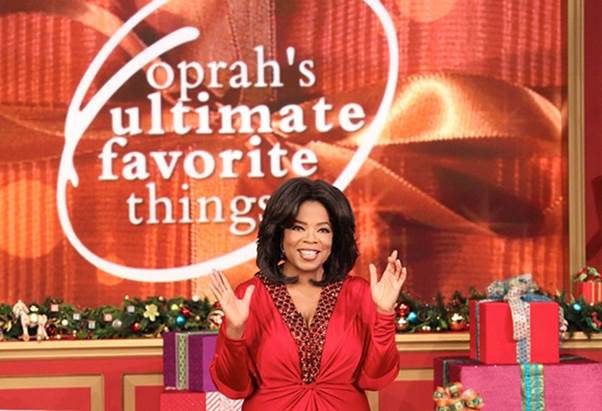
This effect extends far beyond the literary world. A mention in her “Favorite Things” segment can turn a small business into a national brand. But again, the power lies not in the celebrity endorsement itself, but in the perceived authenticity behind it. In a world saturated with influencer marketing and sponsored posts, Oprah’s recommendations feel like they come from a trusted friend. This is a level of influence that cannot be bought or manufactured. It has been earned over a lifetime of consistent, authentic engagement with her audience, a relationship nurtured through every tearful interview, every “aha moment,” and every shared story of overcoming adversity.
Perhaps the most humanizing aspect of Oprah’s story is the stark contrast between her global influence and her humble origins. Born into poverty in rural Mississippi, her journey is a testament to resilience and the power of self-belief. She is a self-made billionaire, with a net worth approaching $3 billion, yet she has never lost sight of where she came from. This is most evident in her philanthropy, which is as personal as it is profound. It’s not about writing checks; it’s about building futures.
The Oprah Winfrey Leadership Academy for Girls in South Africa is a prime example. This wasn’t a one-time donation; it was the creation of a legacy. She has poured millions of her own money and, more importantly, her time and heart into creating a safe, nurturing environment to educate and empower disadvantaged girls, whom she lovingly calls her “daughter-girls.” Her charitable work, from Oprah’s Angel Network raising over $80 million to her significant contributions to the National Museum of African American History and Culture, is driven by a deep-seated desire to provide others with the opportunities she herself had to fight for. She is the billionaire who remembers what it feels like to have nothing, and that memory fuels a generosity that is both strategic and deeply compassionate.
This authenticity is also the engine of her business empire. Under the umbrella of Harpo Productions, she built a media conglomerate that includes the Oprah Winfrey Network (OWN), O Magazine (which has evolved into the digital-first Oprah Daily), and numerous film and television projects. She was the first Black American woman to own her own production company, breaking barriers and creating a platform to tell stories that matter. As a producer of powerful films like Selma and the recent musical adaptation of The Color Purple, she uses her influence to champion narratives that have been historically overlooked. Her success as an entrepreneur is inextricably linked to her personal brand: every business venture is an extension of her core mission to uplift, educate, and inspire.
In today’s fragmented media landscape, where attention is the most sought-after commodity, one might wonder if any single voice can still hold such sway. Yet, as the world becomes louder and more divided, Oprah’s brand of thoughtful, empathetic, and unifying conversation feels more vital than ever. She has seamlessly adapted to new platforms, from her partnership with Apple TV+ to her vibrant digital presence, proving that her message transcends the medium. She demonstrates that true influence isn’t about having the loudest megaphone, but about having the most trusted voice.
Ultimately, Oprah Winfrey’s power is a paradox. It is the power of a global icon that feels like a personal conversation. It is the influence of a billionaire that is rooted in the struggles of a poor country girl. It is the authority of a media mogul that is built on the currency of vulnerability. She is not just a celebrity; she is a connection, a catalyst for change, and a constant reminder of the extraordinary power that resides in every human story, starting with her own.