
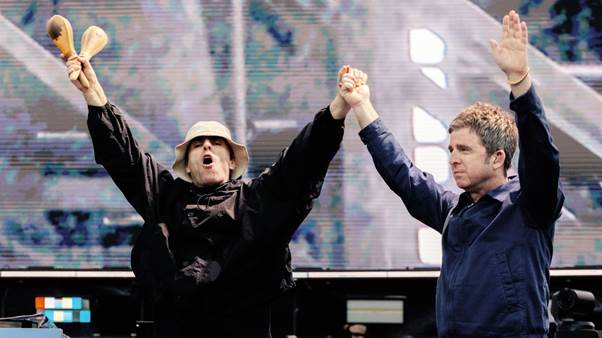
Sixteen years ago, the idea of Liam and Noel Gallagher sharing a stage again seemed about as likely as Manchester United and Manchester City fans hugging it out at Old Trafford. The brothers, famous not only for crafting era-defining anthems but also for spectacular public fallouts, spent over a decade firing barbed insults from opposite sides of the world. Documentaries were made insisting Oasis was dead for good. Their solo careers trudged along in mid-sized theaters, and most fans resigned themselves to nostalgia playlists and grainy YouTube clips of Glastonbury ’95.
And then the impossible happened. In August 2024, after years of stubborn silence, the Gallaghers announced they would reunite for a massive 30th anniversary tour of Definitely Maybe. Music journalists called it a miracle. Fans called it redemption. Bankers called it a windfall.
Fast forward to 2025, and the Oasis Live ’25 tour has become one of the most profitable reunions in music history. With just 25 of the 41 scheduled shows completed, both Liam and Noel have already pocketed over $100 million each. By the time the final chords ring out in São Paulo, that payday could easily climb north of $170 million per brother — and even more if additional dates are added.
A Feud For The Ages
The Gallagher brothers’ rivalry is almost as famous as their music. Oasis exploded out of Manchester in the early ’90s with a blend of raw swagger and arena-ready hooks. Songs like Wonderwall, Don’t Look Back in Anger, and Live Forever cemented their place as Britpop kings. But as the fame grew, so did the friction.
Liam, the brash frontman, embodied rock ’n’ roll excess with a sneer and a pint in hand. Noel, the songwriter and guitarist, was the architect of the Oasis sound and often the adult in the room — until he wasn’t. Their clashes over creative control, money, and just about everything else became the stuff of legend.
By 2009, it all collapsed in Paris after a particularly nasty backstage altercation. Noel quit the band, declaring he couldn’t work “a day longer” with his brother. For years, they communicated only through interviews and Twitter spats, each insisting Oasis was finished forever. Fans mourned, while tabloids gleefully chronicled every insult.
So when the reunion was announced in 2024, jaws dropped. The Gallagher brothers had gone from being unable to share oxygen to signing off on one of the largest stadium tours ever attempted.
The Numbers Behind the Mayhem
The Oasis Live ’25 tour officially kicked off on July 4th with fireworks both literal and figurative. Twenty-five shows in, the numbers are staggering:
- Venues: 70,000–90,000 capacity football stadiums and festival-style parks across Europe, North America, Asia, and South America.
- Crowds so far: Over 2 million fans have already seen Oasis back in action.
- Projected gross: About $425 million in ticket sales across the 41 scheduled shows.
At an average ticket price of $140, nightly grosses often hover around $10 million. For comparison, that puts Oasis in the same revenue stratosphere as Taylor Swift’s Eras Tour and U2’s legendary 360° Tour.
But the real shock is what the brothers actually take home. Top-tier acts like Oasis command around 85% of net ticket revenue, leaving promoters like Live Nation or AEG with the scraps. That means Oasis alone could walk away with about $361 million from tickets before factoring in anything else.
Of course, tours of this scale aren’t cheap. Lights, staging, pyrotechnics, massive LED walls, dozens of trucks hauling gear, crew salaries, insurance — it all adds up. Estimates put production costs at $60–70 million. Even so, Oasis is still projected to clear about $291 million in ticket profits alone.
Merch Madness
If you’ve been to a stadium show, you know the real battle is at the merch stand. Fans line up for hours, sometimes buying hundreds of dollars’ worth of shirts, hoodies, and posters. Oasis tapped into that frenzy perfectly.
With t-shirts priced around $50 and fans averaging about $10 each in purchases, the band is on track to generate roughly $30 million in merch revenue. After production and cuts, that’s about $25 million in profit — pure icing on an already lucrative cake.

Cameras Rolling — The Streaming Goldmine
It’s almost certain that a streaming deal will follow. A behind-the-scenes documentary chronicling the tension, reconciliation, and jaw-dropping crowds has “global hit” written all over it. Similar deals with artists like Beyoncé and The Rolling Stones have netted tens of millions.
Analysts estimate a potential payday of at least $30 million for Oasis. If some of that has already been paid upfront — which is common — both Liam and Noel are likely already enjoying that boost in their bank accounts.
The Payout So Far
Let’s crunch the totals:
- Ticket profits: $291 million
- Merch profits: $25 million
- Streaming deal (projected): $30 million
- Total Oasis earnings: $346 million
Split evenly, that’s about $173 million per brother. With just over half the shows completed, Liam and Noel have already each earned around $100 million. Another $70+ million awaits if they complete the full schedule. And if they add more shows — which industry insiders fully expect — every additional 10 stadium dates could mean another $40+ million each.
Why It Means More For Liam
The money is life-changing for both, but the impact is starkly different.
- Noel: Heading into the tour, Noel already boasted a net worth of around $70 million. As Oasis’s chief songwriter, he controls the publishing rights — the real golden ticket in the music business. Every time Wonderwall or Champagne Supernova gets played, licensed, or covered, Noel cashes the check. That steady stream of publishing income has kept him wealthy even during Oasis’s hiatus.
- Liam: His story is the opposite. Despite being the iconic voice of Oasis, Liam’s net worth in mid-2024 was estimated at just $6 million. Because he didn’t write most of the band’s hits, his royalty income was minimal. He also spent freely — luxury hotels, designer clothes, lavish travel — and his 2014 divorce from Nicole Appleton cut his fortune in half.
So while Noel’s earnings are an impressive boost, for Liam this tour is nothing short of a financial resurrection. For the first time in decades, he’s standing shoulder-to-shoulder with Noel not just on stage but in the bank.

From Small Theaters To Stadiums Again
The scale of this reunion is even more jaw-dropping when you compare it to their recent solo careers.
- Noel Gallagher’s High Flying Birds: Released four albums, even a double-disc “greatest hits.” Their biggest venues? Places like the 5,900-seat Greek Theatre in Los Angeles. Respectable, but a far cry from Wembley.
- Liam Gallagher John Squire: Liam teamed with the Stone Roses guitarist in 2024 for a short run of small venues — 2,700-capacity theaters in Brooklyn and 3,000-seat halls in Manchester.
Now, in 2025, Oasis has already played for 400,000 people across five shows in London, 400,000 more in Manchester, and nearly 200,000 across two nights in Los Angeles. That’s not just a reunion. That’s a resurrection.
Beyond The Money: The Moment
Yes, the paychecks are massive. But for fans, the bigger story is emotional. For over a decade, the dream of hearing Liam roar Don’t Look Back in Anger while Noel strummed alongside him seemed dead. Now millions of people around the world are witnessing the impossible.
It’s hard to overstate the cultural moment. Oasis defined an era, soundtracking the youth of the ’90s and early 2000s. Their return is more than nostalgia; it’s proof that music still has the power to unite, even after years of bitterness.
What’s Next?
The question now: does this end with the São Paulo show, or could the brothers actually keep Oasis alive?
Rumors are already swirling about a possible album. Noel has insisted in interviews that new music is “not on the table,” but then again, he once swore he’d never play live with Liam again either. Record labels would line up with nine-figure offers for a new Oasis album. A Las Vegas residency could easily bring in another quarter-billion.
And given how lucrative this reunion has already proven, it’s hard to imagine either Gallagher walking away just yet.
For years, Oasis was a “what if.” What if the brothers could have kept it together? What if they had continued after 2009? In 2025, fans no longer have to wonder. The band is back, the stadiums are full, and the Gallaghers are richer than ever.
The Oasis Live ’25 tour isn’t just one of the most successful comebacks in music history — it’s a rare moment when the money, the music, and the memories all align.
And whether they add 10 more shows, 40 more shows, or even another album, one thing is certain: Liam and Noel Gallagher are finally looking forward together — and for the first time in decades, so are their fans.