

In the glitzy, high-stakes world of Hollywood, success is often measured in nine-figure box office returns and astronomical net worths. By that standard, Sean Baker might seem like an anomaly. He is one of the most celebrated and important American directors of his generation, a filmmaker whose work is lauded at the most prestigious festivals around the globe. Yet his story is not one of blockbuster paydays.
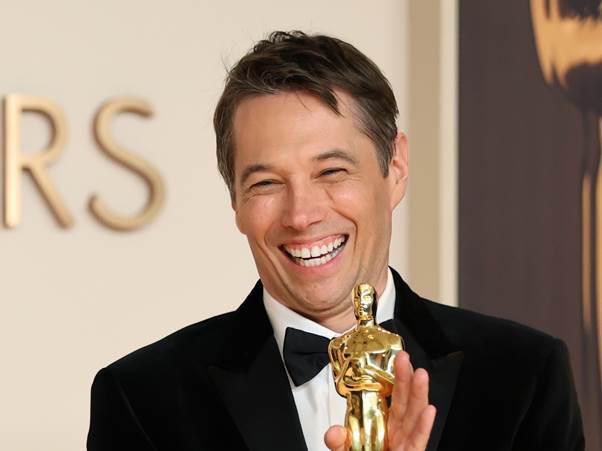
With a net worth estimated at a grounded $2 million, Sean Baker’s financial picture tells a different kind of success story. It’s a testament to a career built not on commercial compromise, but on unwavering artistic integrity and a profound commitment to telling the vibrant, humane, and often overlooked stories of people living on the fringes of American society. His wealth isn’t measured in the traditional Hollywood sense, but in critical adoration, creative freedom, and, most recently, in the form of cinema’s highest and most coveted honor: the Palme d’Or.
This is the story of how a resourceful, guerilla-style filmmaker honed his craft for decades, revolutionized indie cinema with an iPhone, and ultimately reached the pinnacle of his profession, proving that the most valuable assets a director can have are a unique voice and a deep sense of empathy.
Part 1: The Guerilla Filmmaker – Early Works and a Signature Style
Sean Baker’s artistic mission was forged long before he was a celebrated name. After graduating from New York University’s Tisch School of the Arts, he embarked on a career in independent filmmaking, drawn to stories and communities that were invisible to mainstream Hollywood. From the very beginning, his work was defined by a raw, immersive, and deeply humanistic style that has become his signature.
His early films, like “Take Out” (2004), co-directed with Shih-Ching Tsou, were exercises in resourcefulness and authenticity. The film follows a day in the life of an undocumented Chinese immigrant working as a food delivery driver in New York City. It was shot on a shoestring budget with a tiny crew, often in a “guerilla” style—filming in real, working environments without permits, and casting non-professional actors to add a layer of cinéma vérité realism.
This approach was born of necessity, but it became his artistic ethos. Baker demonstrated an incredible talent for capturing the texture and rhythm of life for those on the economic margins. His films were not poverty porn; they were vibrant, often funny, and deeply empathetic portraits of resilience and community. He followed up with films like “Prince of Broadway” (2008), about a Ghanaian immigrant and street hustler in New York, and “Starlet” (2012), an unlikely story of friendship between an adult film actress and an elderly woman in the San Fernando Valley.
These early works were not major commercial hits, but they were darlings of the festival circuit and earned him a reputation as a fiercely independent and singular voice in American cinema. He was building a body of work and a methodology that prioritized authentic storytelling above all else.
Part 2: The iPhone Revolution – “Tangerine” and a New Level of Fame
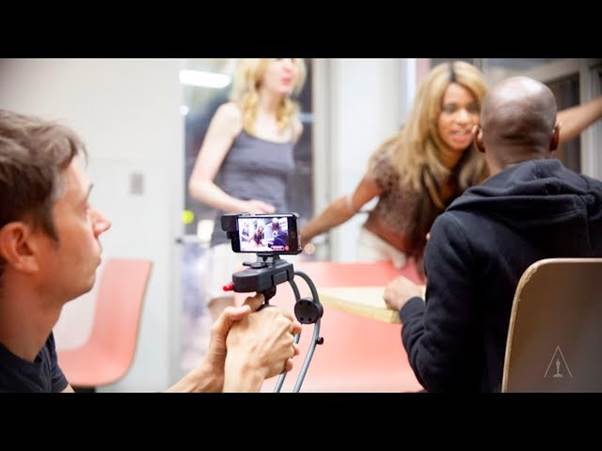
In 2015, Sean Baker released the film that would make him an indie-world celebrity and forever change the conversation around low-budget filmmaking. “Tangerine” is a frenetic, hilarious, and ultimately touching Christmas Eve story following two transgender sex workers, Sin-Dee Rella and Alexandra, on a chaotic journey through Hollywood.
The film was groundbreaking for its vibrant and respectful portrayal of its characters, played brilliantly by first-time actors Kitana Kiki Rodriguez and Mya Taylor. But what generated the most headlines was the technical innovation behind it: the entire movie was shot on three iPhone 5S smartphones.
This was not a gimmick. Baker and his team used the iPhones with anamorphic lens adapters and specialized filmmaking apps to create a surprisingly cinematic, widescreen look. The choice was both practical—it kept the budget incredibly low—and artistic. The portability and inconspicuousness of the phones allowed them to capture the raw, frenetic energy of the streets in a way that a traditional film crew never could.
“Tangerine” premiered at the Sundance Film Festival to rave reviews and became a cultural phenomenon. It was a punk-rock statement that proved that the barrier to entry for professional filmmaking had been shattered. You no longer needed a multi-million-dollar camera package to create a visually stunning and emotionally resonant film. The success of “Tangerine” catapulted Baker to a new level of international acclaim and demonstrated his genius for turning limitations into strengths.
Part 3: The Masterpiece – “The Florida Project” and Critical Adoration
With the cultural capital he gained from “Tangerine,” Sean Baker embarked on his most ambitious and beautiful film to date. “The Florida Project” (2017) is a deeply immersive and visually breathtaking look at the lives of a six-year-old girl named Moonee and her rebellious young mother, Halley, living in a budget motel in the shadow of Walt Disney World.
The film is a study in contrasts: the candy-colored world of the motel and the sun-drenched Florida landscape set against the harsh realities of poverty and housing insecurity. Baker once again cast a brilliant first-time actress, Brooklynn Prince, as Moonee, and her performance was hailed as one of the best of the year. Alongside the newcomers, he cast veteran actor Willem Dafoe as Bobby, the motel’s compassionate and world-weary manager. Dafoe’s gentle, nuanced performance earned him an Academy Award nomination for Best Supporting Actor.
Distributed by the indie powerhouse A24, “The Florida Project” was a massive critical success. It was lauded for its stunning 35mm cinematography, its profound empathy, and its heartbreakingly beautiful story. It cemented Baker’s reputation as one of America’s most important living directors. While still a modest financial success by Hollywood standards, it was his most commercially successful film yet, further raising his profile and giving him the creative freedom to pursue his next projects.
Part 4: The Economics of Independence – Why $2 Million is a Success Story
To understand Sean Baker’s $2 million net worth, one must understand the financial reality of independent filmmaking. It is a world away from the nine-figure budgets and eight-figure salaries of the Hollywood studio system.
- Financing: Independent films like Baker’s are typically funded through a patchwork of sources: grants from arts foundations, pre-sales of distribution rights in foreign territories, and investments from private equity groups or wealthy individuals who believe in the director’s vision.
- The Director’s Salary: Unlike blockbuster directors who command multi-million dollar upfront fees, an indie director like Baker often works for “scale”—the minimum salary stipulated by the Directors Guild of America—or sometimes, for no upfront fee at all. They sacrifice a large initial payday in exchange for complete creative control and a significant stake in the film’s “back-end.”
- Profit Participation: The real financial reward for an indie filmmaker comes from a share of the film’s profits if it becomes successful. After the investors, distributors, and marketing costs are paid back, the key creatives (like the director, writer, and producers) begin to receive a percentage of the remaining revenue.
This is a high-risk, high-reward model. Most independent films fail to make a profit, and the filmmakers walk away with little more than the experience. However, for a director like Baker, who consistently produces critically acclaimed films that find an audience, this model has allowed him to build a sustainable career. His $2 million net worth is a testament to nearly two decades of this grind. It represents the accumulated success of several profitable ventures, allowing him to live comfortably while reinvesting in his art. It is the fortune of a dedicated craftsman, not a commercial journeyman.
Part 5: Reaching the Summit – The Palme d’Or for “Anora”
In May 2024, Sean Baker’s entire career of artistic integrity and perseverance was validated on the world’s most prestigious cinematic stage. His latest film, “Anora,” a high-energy, dark-comedy thriller about a sex worker who marries the son of a Russian oligarch, premiered at the Cannes Film Festival. It received a rapturous reception, culminating in Baker winning the Palme d’Or, the festival’s top prize.
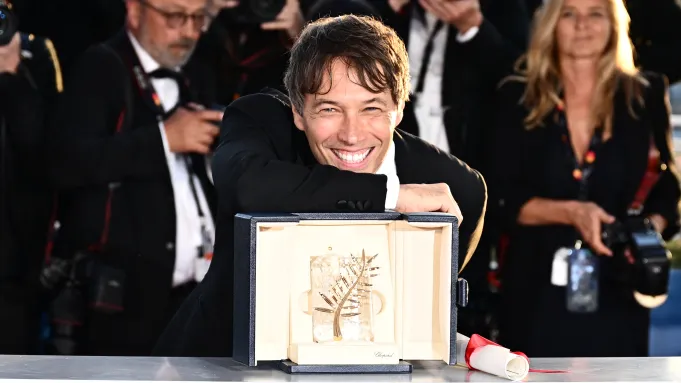
Winning the Palme d’Or is arguably the highest honor in international cinema, placing a director in the pantheon of legends like Francis Ford Coppola, Martin Scorsese, and Quentin Tarantino. For Baker, it was the ultimate recognition of his unique voice and his career-long dedication to telling stories about characters in the sex work community with humanity and dignity.
The win has immediate and profound implications for his career and future net worth. A bidding war for the film’s distribution rights erupted at Cannes, with the indie studio Neon acquiring it for a significant sum. This deal alone likely resulted in a major payday for Baker. More importantly, a Palme d’Or winner has their pick of future projects. He will now have access to larger budgets, bigger stars, and, undoubtedly, much larger upfront directing fees. The win doesn’t just celebrate his past; it secures his financial future, ensuring he can continue to make his unique brand of cinema on a larger scale.
Rich in Artistry
Sean Baker’s career is a powerful reminder that success in film can be measured in more than just dollars. His $2 million net worth is the financial footprint of a journey dedicated to prioritizing stories over paychecks, empathy over spectacle, and authenticity over artifice.
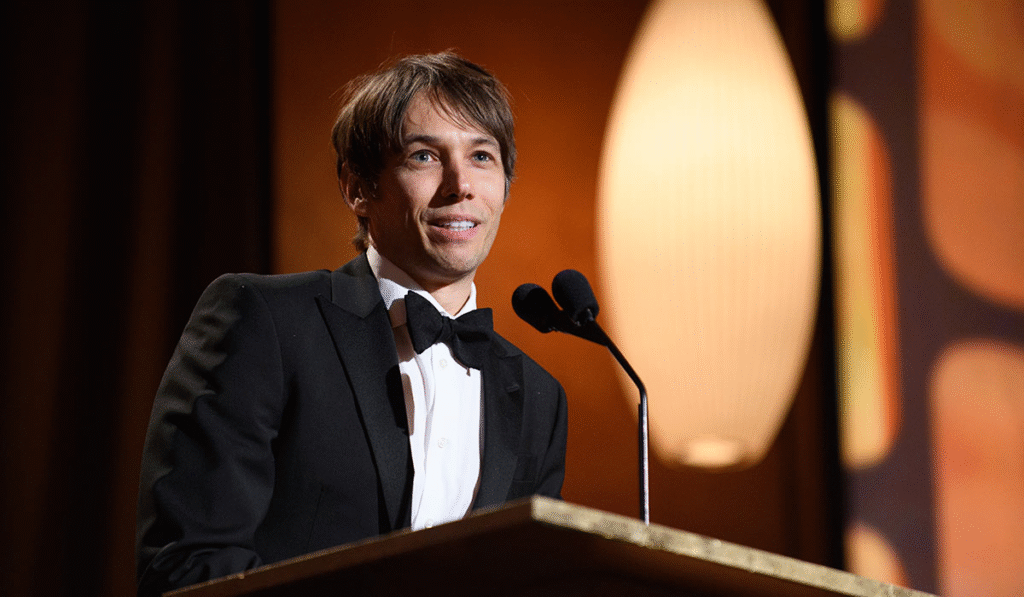
He is the people’s auteur, a master craftsman who finds beauty, humor, and grace in the most overlooked corners of society. His true wealth lies in his incredible body of work and the cultural capital he has accrued over two decades. With the Palme d’Or now in his hands, he has been crowned a king of cinema. He may not have the net worth of a Hollywood mogul, but in the currency of artistry and prestige, Sean Baker is one of the richest filmmakers in the world.