
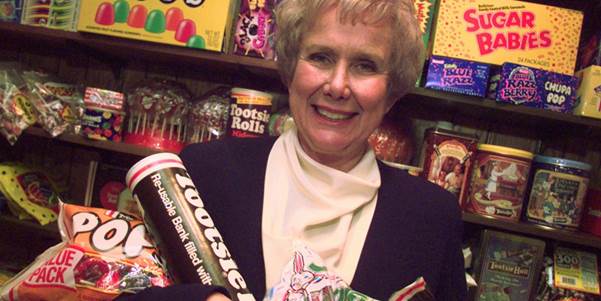
If you happened to meet Ellen Gordon at a coffee shop in Chicago, you might not immediately guess that she’s a billionaire CEO. With her tidy hair, classic Midwestern blazers, and grandmotherly smile, she looks like someone who could just as easily be handing out cookies at a church bake sale as leading a company. But Ellen Gordon isn’t just any grandmother — she’s the woman running Tootsie Roll Industries, one of America’s most enduring candy companies.
And yes, at 93 years old, she still shows up as the company’s active chief executive. Not only that, she owns nearly half of Tootsie Roll, making her a billionaire in her own right.
For her grandkids and great-grandkids, that means the candy tucked in her purse isn’t a generic mint or a caramel. Chances are, it’s the chewy chocolate-flavored treat that her company has been producing for more than a century.
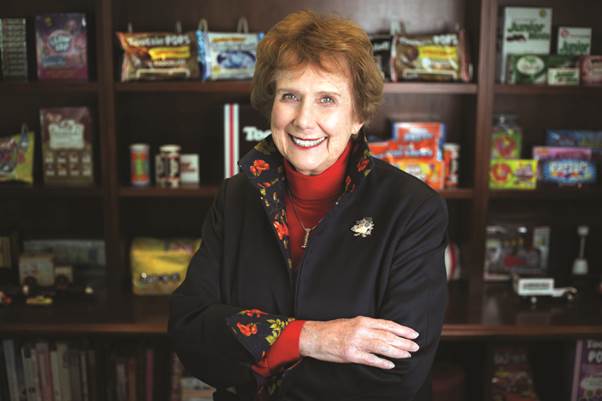
A Candy That Refused to Melt
The Tootsie Roll story starts not with Ellen but with Leo Hirshfield, an Austrian immigrant who landed in New York City in the 1880s. Like many arrivals of his generation, Leo brought a family trade with him — candy making.
By 1896, he was running his own small shop in Brooklyn, but he faced a serious problem: the chocolate bars he knew from home melted into a sticky mess in the sweltering New York summers. If he wanted to sell sweets across the country, he needed something sturdier.
So he experimented until he created a chewy chocolate-flavored candy that could survive heat without losing its shape. Affordable, portable, and tasty, it was exactly what kids wanted. Leo named it after his daughter Clara, whom he affectionately called “Tootsie.”
The Tootsie Roll was an instant success. By the 1910s, it was already a household name. In 1917, Leo incorporated the company as The Sweets Company of America and, a few years later, listed it on the New York Stock Exchange. Along the way, the company introduced other classics, including the Tootsie Pop — a lollipop with a chewy chocolate center that became a symbol of childhood during the Great Depression.
New Owners and Wartime Growth
Despite its popularity, the company struggled financially during the 1930s. In 1935, businessman Bernard D. Rubin took control, replacing founder Leo Hirshfield. Bernard modernized operations, increased the size of the Tootsie Roll, and tweaked the formula to give it a richer chocolate taste.
In 1938, he moved production to Hoboken, New Jersey, where costs were lower. But it was World War II that turned Tootsie Roll into a true American icon. The candy was included in U.S. soldiers’ field rations because it could withstand both heat and cold. Soldiers came home with a taste for it, ensuring its place in American culture for decades to come.
The Rise of Ellen Gordon
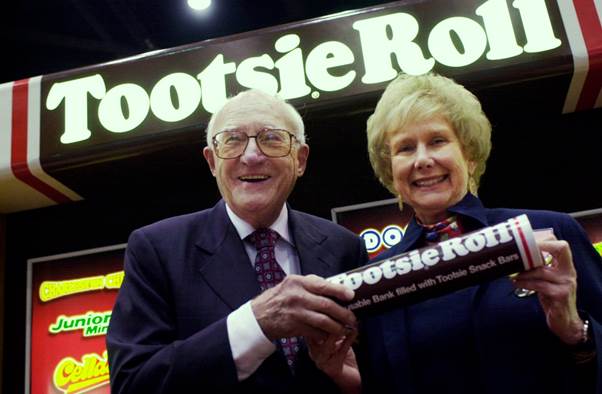
When Bernard Rubin died in 1948, his brother William took over. By the early 1960s, William’s daughter Ellen Rubin Gordon and her husband Melvin Gordon were leading the business. Ellen became president, while Melvin stepped in as CEO. In 1966, they officially renamed the company Tootsie Roll Industries and moved headquarters to Chicago.
Ellen and Melvin weren’t flashy executives. They didn’t host earnings calls or court Wall Street analysts. In fact, the company became famous for releasing bare-bones financial statements — often just simple PDF scans. Yet, under their stewardship, Tootsie Roll quietly grew into a candy empire.
Over the decades, the Gordons expanded the portfolio to include Junior Mints, Charleston Chew, Sugar Babies, Blow Pops, and Dubble Bubble gum. Instead of chasing short-term profits or corporate fads, they focused on long-term stability.
It worked. From the 1960s through the 2010s, Tootsie Roll stock climbed steadily, rewarding patient shareholders who believed in the slow-and-steady approach.
A Candy Company That Outlasted Giants
Tootsie Roll’s story is even more remarkable when you compare it to other candy makers. The Wrigley Company, another Chicago candy dynasty, eventually sold to Mars for $23 billion in 2008. Many other independent candy companies have been gobbled up by conglomerates like Hershey, Nestlé, or even Warren Buffett’s Berkshire Hathaway.
But not Tootsie Roll. Despite its size and popularity, it has remained fiercely independent under Ellen Gordon’s leadership. Even Buffett, a self-professed candy addict who owns See’s Candies and major stakes in Coca-Cola, has never managed to acquire Tootsie Roll.
Billion-Dollar Candy
When Ellen’s husband Melvin passed away in 2015 at the age of 95, she became the sole leader of the company. At that time, Tootsie Roll’s market cap was around $2 billion, and the Gordons’ combined stake was valued at nearly $1 billion.
Fast-forward to today, and Tootsie Roll’s market cap has risen to $3.25 billion. Ellen Gordon herself owns nearly 49% of the company, making her net worth roughly $1.6 billion.
Not bad for a family business that started in a Brooklyn candy shop more than a century ago.
The Grandma Who Runs a Candy Empire
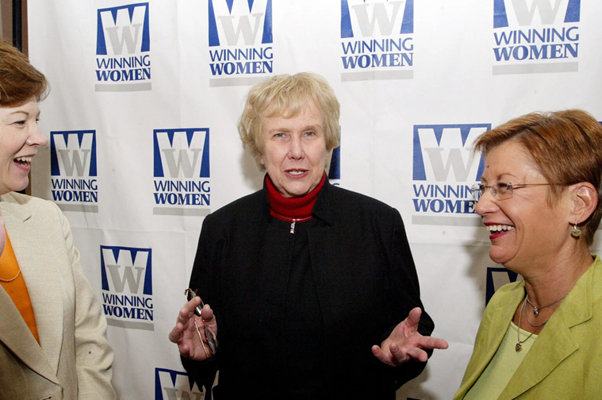
What makes Ellen Gordon’s story so unusual isn’t just the money — it’s the contrast. On the surface, she embodies the image of a traditional grandmother, more likely to be found knitting or baking than managing a Fortune 500-style enterprise. Yet she’s one of the oldest active CEOs in America, still making decisions about a billion-dollar company in her 90s.
For her employees and investors, Ellen represents stability. For her family, she’s simply Grandma — albeit one whose candy company has touched generations of kids worldwide.
In an industry dominated by mergers, takeovers, and marketing hype, Tootsie Roll remains exactly what it has always been: a simple, sweet treat that lasts.
And that’s thanks, in large part, to a 93-year-old billionaire who has proven that sometimes the sweetest success comes not from chasing trends but from staying true to tradition.