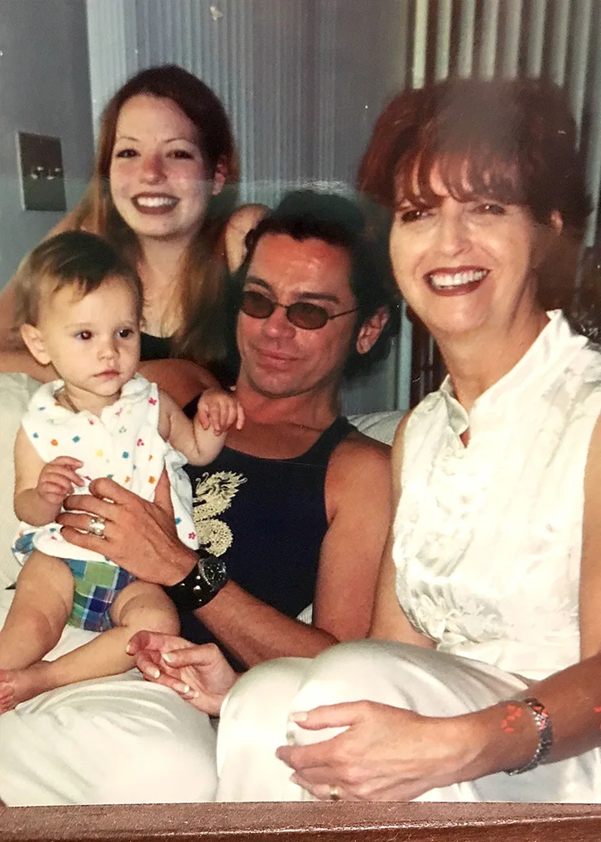

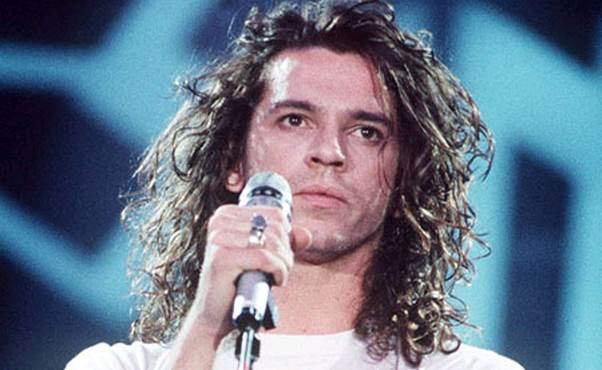
In the pantheon of rock and roll’s most iconic frontmen, few burned as bright or as captivatingly as Michael Hutchence. As the lead singer of INXS, he was the embodiment of 1980s cool—a magnetic performer with a voice of velvet and steel, whose untamed charisma sold out stadiums and moved tens of millions of albums. His life was a whirlwind of artistic triumph, global adoration, and legendary excess. When his life ended tragically in a Sydney hotel room in November 1997, the world mourned the loss of a generational talent. The assumption was that he left behind a legacy not only of music but also of substantial wealth, a fortune that would secure the future of his infant daughter and provide for his family. This assumption was wrong.
In the decades since, the story of Michael Hutchence’s estate has become a cautionary tale of faded rock glory, a labyrinth of offshore finance, and a series of bitter legal battles that have left his heirs with little more than questions. The promised inheritance, once estimated at over $13 million, has seemingly vanished into a complex web of trusts and corporate entities, making the fate of the INXS singer’s fortune one of music’s most perplexing and enduring mysteries.
The Making of a Million-Dollar Empire
To understand the scale of what was lost, one must first appreciate the height of Hutchence’s success. INXS was not merely a successful band; it was a global phenomenon. The 1987 album Kick alone sold over 20 million copies worldwide, spawning anthems like “Need You Tonight,” “New Sensation,” and “Never Tear Us Apart” that dominated airwaves and defined an era. The band’s tours were massive, lucrative undertakings, and Hutchence, as the focal point, commanded a significant share of the earnings.
His songwriting partnership with keyboardist Andrew Farriss was the creative and financial engine of the band. As the co-writer of nearly all of INXS’s biggest hits, Hutchence was entitled to a continuous stream of publishing royalties—a form of income that can provide wealth for generations long after the touring stops. By the mid-1990s, his personal fortune was conservatively estimated to be worth the equivalent of nearly $30 million in today’s dollars. On paper, he died an extremely wealthy man.
A Will and a Broken Promise
Hutchence’s last will and testament seemed to lay out a clear and compassionate plan for this wealth. His daughter, Heavenly Hiraani Tiger Lily, just 16 months old at the time of his death, was to receive half of his entire estate. The remaining half was to be divided equally among his parents, his brother, his half-sister, and the mother of his child, Paula Yates. The document also included generous bequests of $250,000 each to the charities Amnesty International and Greenpeace.
It was a straightforward document that reflected his wishes to care for his child, his family, and the causes he believed in. Yet, it was a promise that would never be fulfilled. The charities confirmed they never received the donations. His family members have stated consistently and publicly that they have never received a single cent from the estate.
The Labyrinth: Offshore Trusts and Hidden Assets
The reason for this disconnect between the will’s instructions and reality lies in the sophisticated financial structures that controlled Hutchence’s assets. Rather than being held in his personal name, the majority of his wealth was funneled through a network of offshore companies and trusts, primarily based in the British Virgin Islands. The most significant of these was an entity known as Chardonnay Investments N.V.
These structures, often used by the ultra-wealthy for estate planning and tax mitigation, were designed to be complex. Shockingly, court filings would later reveal that Michael Hutchence himself was not listed as a beneficiary of some of these trusts. The stated intent, according to financial advisors, was to “protect” the assets from claims by family members or former partners. This arrangement rendered the sentiments expressed in his will virtually meaningless, as he did not technically own the assets he was attempting to bequeath.
The Key Player and the Paradise Papers
At the center of this financial maze was Colin Diamond, a longtime business manager and friend of Hutchence. In the immediate aftermath of the singer’s death, Diamond assumed control of his affairs. The Hutchence family, particularly Michael’s brother Rhett, have accused Diamond of systematically seizing control of Michael’s tangible and intellectual property, including personal diaries and lyric books, effectively locking the legal heirs out.
The full scope of these dealings was thrust into the international spotlight in 2017 with the leak of the “Paradise Papers,” a trove of confidential documents from offshore law firms. These documents revealed that Colin Diamond had established a company in Mauritius called Helipad Plain, explicitly created to commercialize Michael Hutchence’s image, unreleased recordings, and other materials around the 20th anniversary of his death. Internal communications from the law firm Appleby expressed significant concern, labeling Diamond a “high risk” client due to his litigious history and the clear potential for disputes over the ownership of the assets he was seeking to exploit.
The papers also detailed a settlement between the estate and Chardonnay Investments that had assigned all intellectual property rights to the offshore company, solidifying Diamond’s control. While the master recordings of INXS songs are owned by the record labels, and the publishing rights were later sold in perpetuity to Warner Chappell Music, Chardonnay retained claims to various other songs and assets, creating a financial stream that appears to bypass the intended heirs.
A Legacy Unfulfilled
The human cost of this financial saga is immeasurable. Tiger Lily Hutchence, now an adult, has reportedly received some support over the years, but it is believed to be a fraction of the multi-million dollar inheritance she was promised. The rest of the Hutchence family, named beneficiaries in the will, have received nothing. The situation was further salt in the wound when Diamond publicly revealed pages from Michael’s private diary on a television special, a document the family had never seen before.
The story of Michael Hutchence’s fortune is more than a tale of missing money. It is a story about how the trappings of wealth—the lawyers, the offshore accounts, the complex trusts—can distort and ultimately erase the final wishes of an individual. It is a warning that a will alone is not enough if the assets it describes are held beyond its reach. The man who had everything—talent, fame, and fortune—left behind a legacy of incredible music and a profound mystery: the question of where his millions went, and why his daughter and family were never allowed to receive them.