
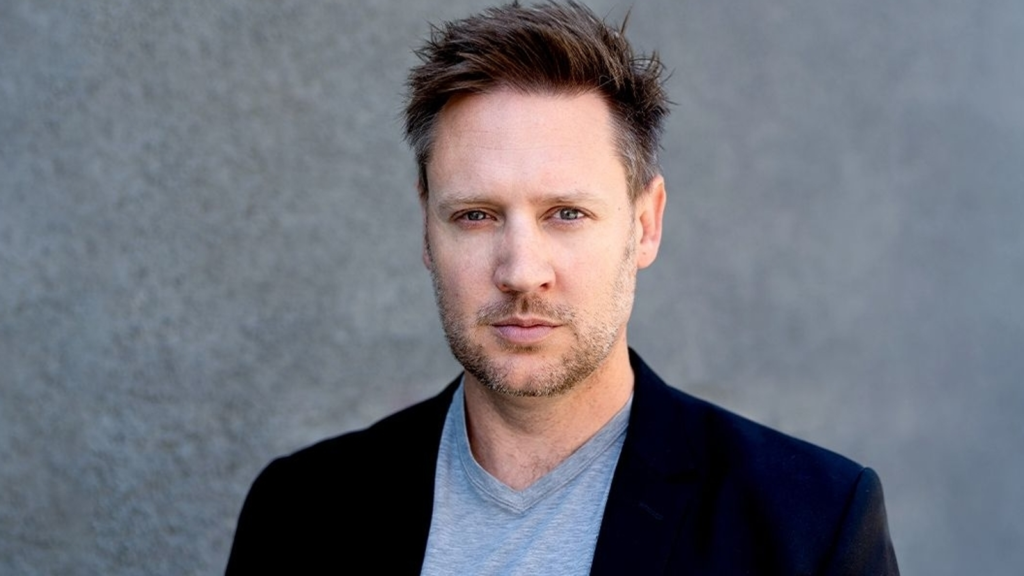
Neill Blomkamp is the wunderkind director who exploded onto the global film scene with one of the most original, thrilling, and socially resonant science fiction films of the 21st century. With his debut feature, District 9, he didn’t just create a movie; he created a phenomenon, seamlessly blending gritty, documentary-style realism with breathtaking visual effects to tell a powerful story of xenophobia and segregation.
With a net worth estimated at $20 million, Neill Blomkamp’s fortune is a direct result of that explosive debut, supplemented by a career directing high-concept Hollywood blockbusters and, more recently, a return to his independent roots with his own experimental studio. His financial story is a fascinating case study in how a single, lightning-in-a-bottle success can create lasting wealth and provide an artist with the freedom to pursue a unique and uncompromising vision.
This is the story of how a self-taught visual effects prodigy from South Africa became a Hollywood A-lister overnight, and how he has since navigated the pressures of the studio system while striving to maintain the innovative spirit that made him a star.

The VFX Prodigy – From Johannesburg to Vancouver
To understand Neill Blomkamp’s distinctive filmmaking style, one must first understand his origins. Born in Johannesburg, South Africa, in 1979, he grew up during the final, turbulent years of the apartheid era. The stark social and political realities of his home country would become a powerful and recurring theme throughout his work.
From a young age, Blomkamp was fascinated with film and animation. He was a self-taught visual effects artist, using a personal computer to learn 3D animation and design. At 18, he moved with his family to Vancouver, Canada, a city that was rapidly becoming a major hub for the film and television industry, earning the nickname “Hollywood North.” He enrolled at the Vancouver Film School, where he honed his skills and prepared to enter the professional world.
After graduating, Blomkamp began a successful career as a visual effects artist, working on popular TV shows like Stargate SG-1 and Smallville. However, his ambition was always to direct. He began helming music videos and, most notably, a series of commercials for major brands like Nike and Citroën. It was in these short-form projects that his signature style began to emerge: a “lo-fi sci-fi” aesthetic that blended photorealistic, often gritty visual effects with handheld, documentary-style cinematography.
His true calling card was a series of short films he directed. The most significant of these was “Alive in Joburg” (2006). This six-minute film, shot in the style of a documentary, depicted a tense and segregated Johannesburg where extraterrestrial refugees, derogatorily nicknamed “Poleepkwas,” were confined to slums. The short was a brilliant and powerful piece of filmmaking that used a science fiction concept to explore the real-world themes of apartheid and xenophobia that he had witnessed growing up. This short film would become the proof-of-concept for the project that would change his life forever.
The “District 9” Miracle – A $30 Million Gamble
Neill Blomkamp’s big break came through a series of events that reads like a Hollywood fairytale. His incredible talent caught the eye of one of the most powerful filmmakers in the world: Peter Jackson, the acclaimed director of The Lord of the Rings. Jackson was so impressed with Blomkamp’s vision that he handpicked him for a massive project: a live-action feature film adaptation of the blockbuster video game series “Halo.”
Blomkamp moved to New Zealand and spent months in pre-production, designing the world of “Halo” with Jackson serving as his producer and mentor. However, the project, with its massive budget, ultimately fell apart due to studio financing issues. For a young director, this could have been a career-ending disappointment. But Peter Jackson’s faith in Blomkamp was unshakable.
In a legendary move, Jackson turned to Blomkamp and effectively said: “The studio won’t fund ‘Halo,’ but I have $30 million. Go make whatever feature film you want to make.” He offered Blomkamp the chance to expand his short film, “Alive in Joburg,” into a full-length feature. This was the ultimate creative gift: a substantial budget with complete artistic freedom.
The result was “District 9” (2009). The film was a global sensation. It was a visceral, intelligent, and emotionally resonant sci-fi action film that was unlike anything audiences had ever seen. It was a massive commercial success, earning over $211 million worldwide on its modest $30 million budget.
Even more remarkably, it was a critical darling and an awards contender. The film received four Academy Award nominations, including the highly coveted nominations for Best Picture and a Best Adapted Screenplay nomination for Blomkamp himself.
This level of success for a debut feature film is almost unprecedented. For Blomkamp, it was financially transformative. As a first-time director working on a non-studio project, he would have almost certainly negotiated a significant “back-end” deal, meaning he would receive a percentage of the film’s profits. Given the movie’s huge return on investment, this single deal would have made him a multi-millionaire overnight and is the primary source of his $20 million net worth.
The Hollywood Follow-Ups – “Elysium” and “Chappie”
With the phenomenal success of “District 9,” Neill Blomkamp was instantly elevated to Hollywood’s A-list. He was no longer an unknown quantity; he was a visionary auteur who could deliver a critically acclaimed blockbuster. The major studios were now lining up to work with him, offering him massive budgets and A-list stars.
His follow-up film was “Elysium” (2013). Starring Matt Damon and Jodie Foster, the film was another high-concept, socially conscious sci-fi epic. It depicted a dystopian future where the wealthy elite live on a luxurious space station called Elysium, while the rest of humanity toils on a ruined Earth. With a budget of over $115 million, it was a much larger and more conventional Hollywood production. The film was a solid box office success, earning over $286 million worldwide, but it failed to capture the same critical magic as “District 9.”
He followed this with “Chappie” (2015), a film about a sentient police robot. The movie starred Hugh Jackman and Sigourney Weaver alongside members of the South African rap group Die Antwoord. “Chappie” was his most critically divisive film yet, though it still performed reasonably well at the box office, earning over $100 million.
While these films didn’t achieve the beloved status of his debut, they were significant for his financial portfolio. Directing two consecutive nine-figure studio blockbusters would have come with multi-million dollar salaries. These director fees would have added substantially to the fortune he had already made from “District 9,” solidifying his financial security.

The Independent Spirit – Oats Studios and a Return to Creative Freedom
After his experience with the pressures and creative compromises of the traditional studio system, Neill Blomkamp made a bold move to return to his independent roots. In 2017, he founded Oats Studios, his own independent film studio based in Vancouver.
The mission of Oats Studios was to create experimental, high-quality, and often bizarre sci-fi short films and release them directly to audiences on platforms like YouTube and the gaming service Steam. The idea was to use these shorts as a creative laboratory—a place to test out new ideas, visual effects techniques, and narratives without the immense pressure of a feature film budget. The business model was to gauge audience reaction to these shorts and then potentially develop the most popular concepts into full-length feature films, funded independently or through a studio partnership.
This venture was a clear return to the creative, unrestrained spirit of his early short films. It allowed him to reconnect with his passion for world-building and visual storytelling on his own terms. Oats Studios produced a series of acclaimed shorts, including “Rakka,” “Firebase,” and “Zygote,” which were praised by fans for their stunning visuals and intriguing concepts.
Navigating the Present – “Demonic” and “Gran Turismo”
In recent years, Neill Blomkamp has continued to work on a diverse range of projects. During the COVID-19 pandemic, he directed “Demonic” (2021), a small-scale, independent horror film that utilized cutting-edge volumetric capture technology.
Most recently, he directed “Gran Turismo” (2023), a major studio film based on the popular PlayStation racing simulation games. The project was a departure from his signature sci-fi work, but it showcased his ability to helm a slick, high-octane action film and deliver a solid commercial product for a major studio.

A Singular Sci-Fi Visionary
Neill Blomkamp’s career is a fascinating journey defined by a singular, powerful vision. He is an artist who achieved the Hollywood dream with his very first film, creating a critically adored, commercially massive, and culturally significant work of art. His $20 million net worth is overwhelmingly anchored by the lightning-in-a-bottle success of “District 9,” a film that remains his defining achievement.
He has since navigated the complex and often frustrating world of big-budget filmmaking, always striving to infuse his work with the same social commentary and visual innovation that made him famous. Through his own independent studio, he has recommitted to the experimental, boundary-pushing spirit that first got him noticed. Neill Blomkamp remains one of the most interesting and important voices in modern science fiction, a filmmaker who continues to forge his own unique path, one incredible world at a time.