
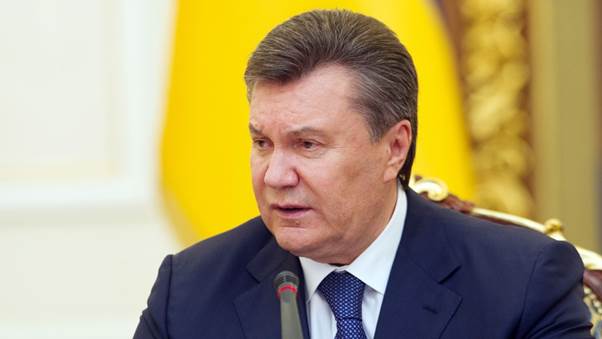
Viktor Yanukovych, a Ukrainian politician who rose from humble and troubled beginnings to become the country’s fourth president, has an estimated net worth of $100 million. His wealth was accumulated through decades in political power, his ties to the pro-Russian Party of Regions, and allegations of corruption and financial fraud that surrounded much of his career. Though he once held the highest office in Ukraine, Yanukovych is perhaps best remembered for his dramatic ousting during the Maidan Revolution of 2014 and his subsequent flight to Russia, where he has lived in exile ever since.
Early Life and Hardship
Viktor Yanukovych was born on July 9, 1950, in the village of Zhukovka, in Donetsk Oblast of the Ukrainian SSR, which was then part of the Soviet Union. His childhood was marked by poverty and tragedy. His mother, a Russian nurse, died when he was only two years old, leaving him in the care of his father, who worked as a Polish-Belarusian locomotive driver. By the time Yanukovych was a teenager, his father also passed away, leaving him effectively orphaned. He was then raised by his paternal grandmother, who was of Polish descent.
The instability of his early years led Yanukovych down a difficult path. At the age of 17, he was sentenced to three years in prison for robbery and assault. Only three years after his release, he was imprisoned again, this time for two years, following another assault conviction. These early brushes with crime and incarceration would remain a controversial stain on his political image, even as he tried to reinvent himself as a reformer and leader.
Education and Early Career
After serving his sentences, Yanukovych sought to rebuild his life. He enrolled at Donetsk Polytechnic Institute, where he studied mechanical engineering. While still a student, he began working in the coal mining industry, a cornerstone of the Donbas region’s economy. His ambition was quickly evident. By his second year of studies, he had already been promoted to director of a small trucking division that serviced coal mines.
Over the next two decades, Yanukovych rose through the ranks of the transport and energy sectors, holding various managerial positions in transport companies tied to mining operations. His steady climb in the Soviet and later Ukrainian economic bureaucracy laid the foundation for his eventual entry into politics.
Entry into Politics
Yanukovych officially entered the political scene in 1996, when he was appointed Vice-Head of the Donetsk Oblast Administration, one of Ukraine’s most industrially important regions. Just a year later, he became Head of the Administration. His work in Donetsk, a region with deep economic and political ties to Russia, earned him a reputation as a pro-Moscow figure.
In 2002, his political fortunes rose sharply when President Leonid Kuchma appointed him Prime Minister of Ukraine. His cabinet was seen as leaning heavily toward Russia, though Yanukovych maintained public support for closer ties with the European Union as well. His opposition to NATO membership, however, marked him as a key player in Ukraine’s eastward geopolitical orientation.
The 2004 Election and the Orange Revolution
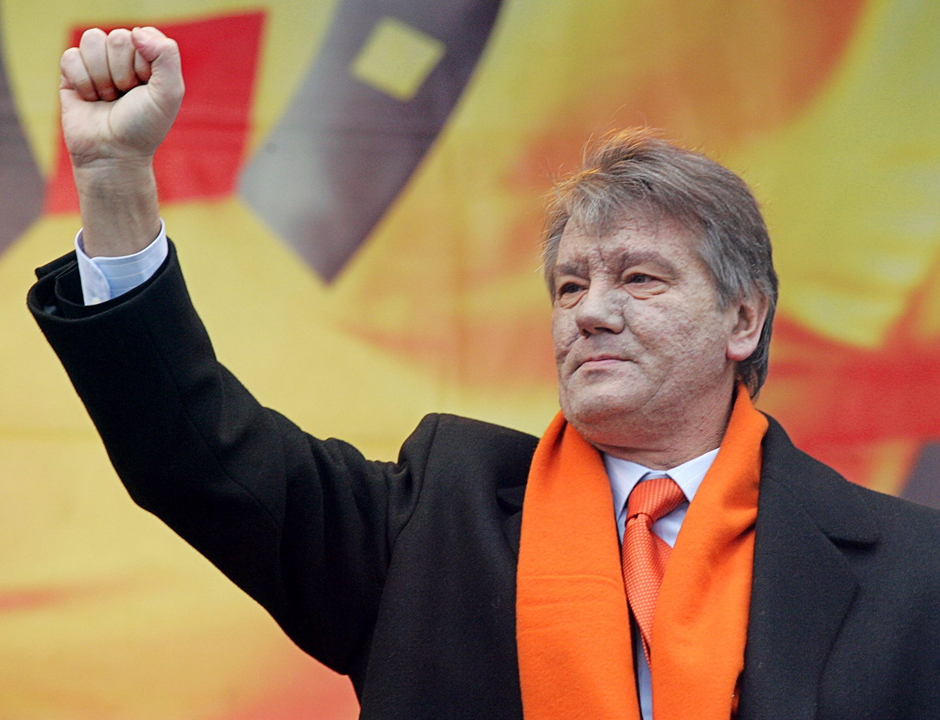
Yanukovych became the Party of Regions’ candidate for the presidency in the 2004 election. The campaign was bitter and polarizing, with his opponent Viktor Yushchenko rallying pro-European voters. After a second round of voting, Yanukovych was declared the winner. However, widespread reports of electoral fraud and international condemnation sparked massive protests.
The demonstrations, later called the Orange Revolution, forced the Supreme Court of Ukraine to annul the results. In the re-run of the election, Yanukovych lost to Yushchenko. Days later, parliament passed a motion of no confidence in his government, and Yanukovych was forced to resign as Prime Minister.
Return to Power
Despite the setback, Yanukovych did not retreat from politics. Instead, he rebuilt his base as the leader of the Party of Regions, which continued to enjoy strong support in the eastern, Russian-speaking parts of Ukraine. In 2005, his party signed a cooperation agreement with United Russia, solidifying his ties to Moscow.
By 2006, the Party of Regions won the parliamentary elections, and Yanukovych’s influence returned. He became chairman of the Government Chiefs Council of the Commonwealth of Independent States in 2007, further cementing his role as a regional political heavyweight.
Presidential Victory in 2010
Yanukovych ran for president again in 2010. Backed by significant financial resources — his campaign was rumored to cost between $100 and $150 million — he succeeded this time, defeating Yulia Tymoshenko in a runoff election. On February 25, 2010, Viktor Yanukovych was inaugurated as the fourth president of Ukraine.
As president, he spoke of unifying East and West Ukraine and promised integration with the European Union while maintaining loyalty to Russia. His balancing act, however, proved untenable.
The Euromaidan Protests and Ouster
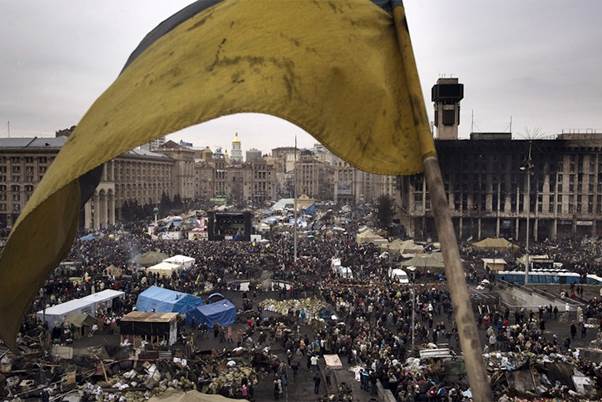
In November 2013, Yanukovych made a fateful decision: he rejected a long-negotiated agreement with the European Union in favor of closer economic ties with Russia. This decision ignited mass protests in Kyiv’s Independence Square, known as the Euromaidan movement.
The demonstrations grew over the winter, with millions demanding not only EU integration but also Yanukovych’s resignation. His government attempted to quell the protests through harsh measures, including the passage of restrictive anti-protest laws in January 2014. Violence escalated dramatically, and dozens of protesters were killed in clashes with security forces.
By February 2014, facing enormous pressure, Yanukovych agreed to early elections and the creation of a transitional government. Before the agreement could be fully implemented, he fled Kyiv, first to Kharkiv and eventually across the border to Russia. On February 22, 2014, Ukraine’s parliament voted overwhelmingly to remove him from office.
Exile in Russia
After his ouster, Yanukovych settled in Russia under the protection of the Kremlin. He initially stayed at the Barvikha Sanatorium near Moscow, a luxurious compound reserved for political elites. From exile, he continued to claim that he was the legitimate president of Ukraine and denounced the revolution as a coup.
His alignment with Russia became even more evident as he expressed support for Moscow’s actions in Ukraine following his removal, including Russia’s annexation of Crimea in 2014.
Personal Life
In 1971, Viktor Yanukovych married Lyudmyla Nastenko, the niece of a city judge in Yenakiyeve. The couple had two sons: Oleksandr and Viktor. Both became public figures, with Oleksandr pursuing business and Viktor entering politics. Tragically, his younger son, Viktor, died in 2015 after drowning in a lake while driving a vehicle on thin ice.
Yanukovych and Lyudmyla were married for 45 years but divorced in 2017 after years of living apart.
Wealth and Lifestyle
Viktor Yanukovych’s net worth is estimated at $100 million, much of it derived from his political connections and alleged corrupt dealings while in power. During his presidency, he became infamous for his lavish lifestyle, epitomized by the Mezhyhirya residence — a sprawling estate near Kyiv featuring golden toilets, a private zoo, luxury cars, and a galleon-style restaurant. After he fled Ukraine, the estate was opened to the public and became a symbol of the corruption and excess associated with his rule.
Legacy
Viktor Yanukovych remains one of the most controversial figures in Ukraine’s history. To his critics, he is a corrupt leader who betrayed his country’s European aspirations and fled in disgrace. To his supporters, particularly in eastern Ukraine, he is remembered as a leader who sought closer ties with Russia and represented their interests.
Financially, his $100 million fortune ensures his comfort in exile, but his legacy in Ukraine is forever tied to the Maidan Revolution, the subsequent geopolitical upheaval, and the country’s ongoing struggle to define its future between Europe and Russia.