

Wilbur Louis Ross Jr. was born on November 28, 1937, in Weehawken, New Jersey, and raised in the nearby town of North Bergen. His upbringing was fairly modest compared to the ultra-wealthy circles he would later enter. His mother, Agnes, worked as a grade school teacher, and his father, Wilbur Sr., was a lawyer who eventually became a judge. These early influences education and law played a subtle but lasting role in shaping Ross’s analytical mind and deep appreciation for structure, logic, and process.
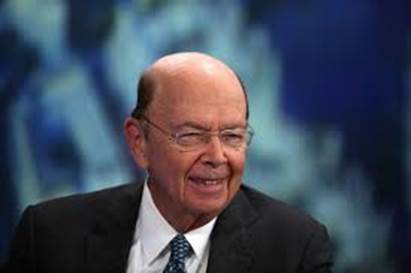
He attended Xavier High School, a rigorous Jesuit institution in Manhattan, where discipline and a strong work ethic were central values. From an early age, Ross was drawn to the arts and media he edited the school’s literary magazine and worked at its radio station. This creative streak may seem ironic given his later career in finance and government, but it revealed a side of Ross that valued storytelling and communication.
His academic path led him to Yale College, where he graduated in 1959. Even while at Yale, Ross was thinking ahead. He managed to land a summer job on Wall Street, offering him his first real taste of the fast-paced world of finance. His next stop was the prestigious Harvard Business School, where he earned his MBA in 1961 a degree that would become the foundation of his career in investment and restructuring.
Wall Street Warrior: Rising Through the Ranks
After completing his education, Ross dove headfirst into finance. His first major position was with Faulkner, Dawkins & Sullivan, a firm known for securities research. Over time, he climbed the corporate ladder and eventually became president of the firm’s investment banking division.
In 1976, Ross took a pivotal step that would define his legacy. He joined the New York office of Rothschild & Co., an international investment firm with a reputation for handling high-stakes deals. There, he specialized in bankruptcy and corporate restructuring a niche but highly profitable area of finance. Ross developed a particular expertise in turning around distressed companies, especially those in heavy industries like steel, coal, and textiles. His work was not just profitable; it was transformative. He was involved in some of the biggest bankruptcies in U.S. history, including Texaco and Eastern Air Lines.
Ross didn’t just crunch numbers he saw struggling companies as undervalued assets with potential. He was known for stepping in where others saw only ruin. It’s this opportunistic mindset, blending cold analysis with business intuition, that made Ross a dominant figure in distressed asset investment.
WL Ross & Co.: The Empire Builder
In 2000, after 24 years with Rothschild, Ross ventured out on his own, founding WL Ross & Co. The firm’s strategy echoed Ross’s earlier work buy failing companies for cheap, restructure them, and sell for a profit. The difference now was that Ross was in charge, and the stakes were even higher.
One of Ross’s most well-known ventures came in the early 2000s, when he began acquiring the assets of bankrupt steel companies such as Bethlehem Steel, LTV Steel, and Acme Steel. He consolidated them into a new entity called the International Steel Group (ISG). Under his leadership, ISG became the largest integrated steel producer in the United States. In 2005, Ross sold ISG to Mittal Steel for $4.5 billion, securing not just a financial windfall but also a seat on Mittal’s board of directors.
But steel wasn’t the only industry Ross turned around. He also acquired Burlington Industries and merged it with Cone Mills to form the International Textile Group. Later, this group merged with Safety Components International, another Ross-controlled company. In 2016, ITG was sold to Platinum Equity.
Ross also made major moves in the automotive and coal sectors, forming the International Automotive Components Group and the International Coal Group, the latter of which was bought by Arch Coal in 2011. Perhaps one of his more controversial investments was in Navigator Gas, a liquefied gas shipping firm, where he became the largest single investor by 2016.
Despite his reputation for smart deals, Ross and his firm weren’t free of controversy. WL Ross & Co. faced accusations of insider trading, fee overcharging, and worker safety violations. Critics questioned whether his profits came at the expense of others, including laid-off workers and underpaid employees in the companies he restructured.
Commerce Secretary: A Billionaire in Government
In 2017, at the age of 79, Wilbur Ross was appointed as the U.S. Secretary of Commerce under President Donald Trump, becoming the oldest first-time Cabinet appointee in American history. With decades of experience in business and a deep Rolodex of global contacts, Ross was seen as someone who could bring a sharp, corporate approach to economic policy.
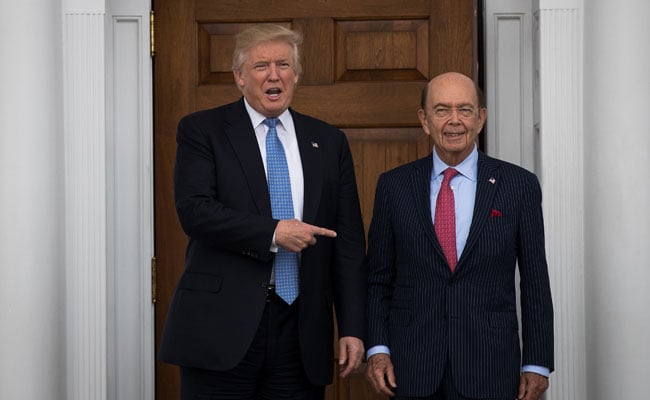
But his tenure wasn’t without turbulence. Ross was a key figure in escalating the U.S. China trade war, imposing tariffs and pushing protectionist policies. While some praised these moves as a defense of American industry, others argued they hurt consumers and strained relationships with long-time allies.
Ross also attracted backlash for his tone-deaf remarks notably, when he suggested during a government shutdown that federal workers who weren’t getting paid should simply take out loans instead of going to food banks. To many, this highlighted a disconnect between Ross’s billionaire lifestyle and the struggles of everyday Americans.
More serious were the legal and ethical concerns. Despite promising to divest from his business holdings upon entering office, a 2018 Forbes investigation found that Ross still retained financial interests in various companies, some with ties to foreign governments like China. He was even accused of insider trading, shorting at least five stocks while in office a potentially criminal violation for a federal official. While Ross denied all wrongdoing, the questions lingered.
In 2020, Ross stirred further controversy when he attempted to add a citizenship question to the U.S. census, falsely claiming it was requested by the Department of Justice. After it was revealed that he had lied under oath, Ross was held in criminal contempt of Congress becoming only the second sitting Cabinet member in U.S. history to face such a charge. While the Supreme Court blocked the citizenship question, the political damage was done.
Beyond Politics: Legacy, Art, and Wealth
Even outside government, Ross has remained deeply involved in finance, art, and philanthropy. He once served on the U.S.–Russia Investment Fund under President Clinton, back when Ross was still a registered Democrat. He also holds board memberships with institutions like the Bank of Cyprus, the Yale School of Management, and Navigator Gas.
Ross’s personal life has also been eventful. He married Judith Nodine in 1961, with whom he had two daughters, Jessica and Amanda. They divorced in 1995. Later that year, he married Betsy McCaughey, a former Lieutenant Governor of New York. That marriage ended in 2000. In 2004, he wed Hilary Geary, a well-known figure in Palm Beach and New York social circles.

With homes in Manhattan, Washington D.C., Palm Beach, and the Berkshires, Ross has long lived in luxury. He is an avid art collector, owning a collection reportedly worth over $150 million. Among his prized possessions are more than 20 works by René Magritte, the famed Belgian surrealist.
Conclusion: A Legacy Written in Dollar Signs and Headlines
Wilbur Ross is not easily defined. Is he a financial genius who saved dying industries, or a political operator who prioritized profit over people? His career is filled with success stories, yes but also scandals, contradictions, and headlines that challenge his public image .
With a reported net worth of $860 million, he has built immense wealth through strategy, timing, and an eye for undervalued assets. But as his time in the public eye showed, wealth and power come with scrutiny.
In the end, Wilbur Ross’s legacy may rest not just in the billions he helped generate, but in the complicated balance between capitalism, governance, and personal integrity.